

Chess timers control how long each player can take to make moves. There are two main types: mechanical and digital. Mechanical timers use a knob to track time, while digital timers use electronics for features like countdown displays. You set the desired time for each player, pressing a button to start the timer. Always make sure both players understand how the timer works. Understanding timers helps manage your time effectively, and more details about formats are available.
The Importance of Timing in Chess
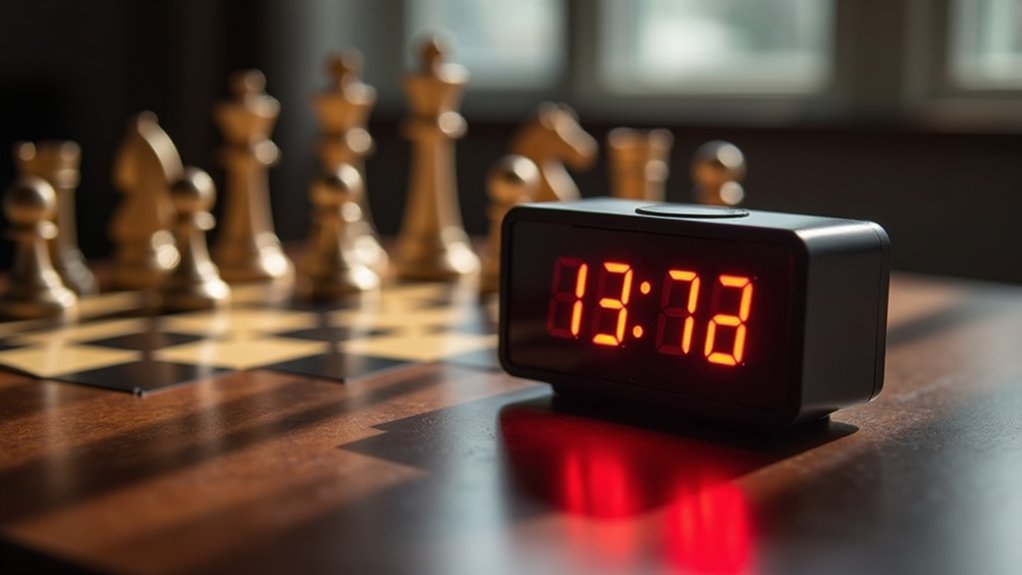
Timing is essential in chess, as it can greatly affect the outcome of a game. A good timing strategy helps you manage your moves efficiently. You’ll want to think carefully about each decision while keeping an eye on the clock.
When you’re low on time, psychological pressure can set in, making you rush your choices. This pressure can lead to mistakes. To succeed, maintain a calm mindset, and focus on your plan, rather than just the ticking timer. Understanding time pressure effects is vital for making better decisions under stress.
Balancing your time with thoughtful moves is key to mastering chess and improving your overall game strategy.
Overview of Chess Timer Types
Chess timers come in various types, each designed to help players manage their time during a game. The two main categories are analog timers and digital timers.
Analog timers use mechanical parts like gears and springs to track time. You set them by turning a dial, and they display time with hands on a clock face.
Digital timers, on the other hand, use electronic displays. They often have features like countdown modes and time controls.
Both types help you stay on track, but they work differently. Choose the one that fits your style and needs for a better chess experience. Additionally, the growing popularity of rapid formats in chess may influence how timers are utilized in competitive play.
Mechanical vs. Digital Timers
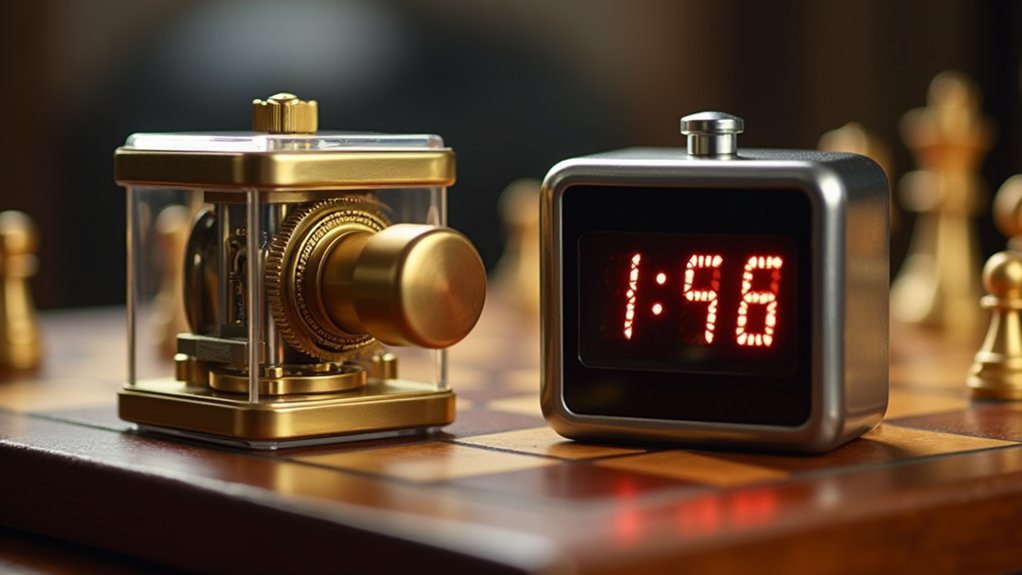
While both mechanical and digital timers serve the same purpose, they operate in very different ways.
Mechanical timers use gears and springs, providing mechanical advantages like reliability and simplicity. You can set them by turning a knob, and they don’t need batteries.
On the other hand, digital timers offer advanced digital features, such as programmable settings and countdown displays. They often include options for time increments, sound alerts, and even pause functions.
Choosing between the two depends on your preference for tradition versus technology. Additionally, understanding the role of mental exertion in chess can help you appreciate why timing is crucial in competitive play.
Understanding these differences helps you select the right timer for your chess games.
How to Set Up a Chess Timer
Setting up a chess timer is simple and can enhance your gameplay. First, read the setup instructions that come with your timer. Verify it’s on a flat surface, easily visible to both players.
Next, adjust timer calibration by selecting the time control you want. For example, set the total time for each player, like 10 minutes or 30 minutes.
Then, set any time increments, if applicable. Press the start button to begin the match. Remember that in formats like blitz chess, players must make quick decisions under time pressure, which can significantly affect the game dynamics.
Remember to check that both players understand how the timer works before starting the game, as this will guarantee a smooth experience.
Understanding Different Timing Systems

Different timing systems can greatly affect how you play chess. Two common systems are incremental time and sudden death.
In an incremental time system, you receive extra seconds after each move. This helps you think and plan better as the game progresses.
Sudden death, on the other hand, means you have a fixed amount of time for the entire game. If you run out of time, you lose, regardless of the position on the board.
Understanding these systems helps you prepare for different scenarios and strategies. Choose the one that suits your style of play and enhances your experience. Additionally, knowing your chess rating systems can help you adapt your timing strategy to match your skill level and improve your overall performance.
Common Chess Timer Settings
Many chess players use common timer settings to manage their game time effectively. One popular setting is the standard time control, like 30 minutes for each player. This gives you a fair amount of time to think.
Another setting is incremental time, where you receive extra seconds after each move. For example, you might start with 15 minutes, plus 10 seconds added per move.
Using a chess clock helps keep track of this time, making sure both players follow the rules. Basic rules of chess dictate how time should be managed during a game.
Choose a setting that matches your skill level and preferences to enhance your chess experience.
The Role of Time Control in Chess
Time control plays an essential role in chess, as it helps manage the pace of the game. It sets limits on how long each player can think about their moves. This guarantees that the game progresses smoothly and prevents any player from taking too much time.
Effective time management is vital. It requires you to balance thinking deeply about your strategy while keeping an eye on the clock.
Proper game pacing not only affects your performance but also influences your opponent’s decisions. By understanding time control, you can enhance your overall gameplay and make smarter choices under pressure. Additionally, mastering tactical puzzles can improve your ability to think quickly and make effective decisions within your time constraints.
Tips for Managing Your Time Effectively
To manage your time effectively in chess, start by setting a clear plan for each move. Think about your strategy before it’s your turn. This helps with time management, allowing you to make decisions quickly.
Next, practice pacing yourself. Use a timer during practice games to simulate real conditions. This aids in stress reduction, as you’ll feel more comfortable under pressure.
Additionally, avoid overthinking. If you’re unsure, make a reasonable move rather than wasting time.
Finally, review your games afterward. Analyze your time usage to improve. Good time management not only enhances your play but also makes the game more enjoyable. Remember, controlling the center is a crucial strategy that can help you maintain the initiative and manage your time better.
The Impact of Timers on Game Strategy
When you play chess, the timer can greatly influence your game strategy. Time pressure occurs when you have limited time to make decisions, which can lead to rushed moves. You might find yourself making mistakes if you don’t manage your time well.
Strategic pacing is vital. You should balance quick moves with careful thought. Take your time on critical positions, but don’t dwell too long on simpler ones.
Adjust your strategy based on the clock, recognizing when to speed up or slow down. This awareness will help you make better choices and improve your overall performance in timed games.
FAQs
Can I Use a Chess Timer for Other Board Games?
Yes, you can use a chess timer for other board games. Many games benefit from a timer’s structure and pace. This timer versatility allows you to set time limits for turns, keeping the game moving.
For alternative games like Scrabble or Monopoly, the timer helps players stay focused. Just make sure that the time limits fit the game’s pace and rules. Experiment with different time settings to find what works best for everyone involved.
What Happens if a Chess Timer Malfunctions During a Game?
If a chess timer malfunctions during a game, it can cause game interruptions.
You should first check the timer’s battery or power source. If it’s a mechanical timer, inspect the gears for damage.
Perform timer troubleshooting by resetting the device, if possible. If it still doesn’t work, agree with your opponent on a fair resolution, like using a different timer or adjusting the game’s time limit.
Are There Chess Timers Specifically Designed for Online Play?
Yes, there are chess timers specifically designed for online play. Online chess timers, also known as digital chess clocks, help you keep track of time during matches.
These timers often include features like different time controls and customizable settings.
When you play online, these digital clocks automatically adjust your time based on your moves. This guarantees fair play and maintains the game’s pace, making it easy for you to focus on strategy.
How Do Chess Timers Affect Tournament Regulations?
Chess timers play an essential role in tournament regulations. They set time controls, which are limits on how long each player has to think and make moves.
Different tournament formats, like blitz or classical, require specific time controls to guarantee fair play. By using timers, organizers manage game speed and fairness, preventing players from taking too long.
This structure helps maintain an exciting and competitive environment for all participants.
Can I Customize Timer Sounds or Alerts?
Yes, you can customize timer sounds or alerts.
First, check your timer settings. Most chess timers allow you to adjust audio preferences.
Open the settings menu, then look for sound preferences.
You may find options to change alert tones, volume, and vibration settings.
Select your preferred sounds, then save your changes.
This way, you can guarantee your timer alerts suit your style and make your game experience more enjoyable.
Final Thoughts
To summarize, understanding chess timers is essential for playing the game effectively. You’ve learned about different types of timers, how to set them up, and the importance of time control. By managing your time wisely, you can improve your strategy and decision-making during matches. Remember, timing can change how you play and think about your moves. Keep practicing with timers, and you’ll become more comfortable and confident in your chess games.


