

To set up a chess board, first, verify the board is oriented with a white square in the bottom right corner. Next, place your pawns along the second row. Position rooks in each corner, with knights next to them, followed by bishops. The queen goes on her color, and the king is placed beside her. Double-check that all pieces are facing the right direction. This setup creates a fair game; you’ll find more helpful tips ahead.
Understanding the Chess Board Layout

A chess board is an 8×8 grid made up of 64 squares. These squares alternate in color, typically black and white, creating a checkered pattern. This layout isn’t just for looks; it helps players understand the board’s symmetry.
When setting up the board, make certain the bottom-right square is a light color. This symmetry aids in visualizing moves and strategies.
Each player has their pieces on the two closest rows. To ensure proper gameplay, familiarize yourself with the initial placement of pieces, which includes the arrangement of rooks, knights, bishops, and the king and queen.
Identifying the Different Chess Pieces
Chess pieces come in various shapes and sizes, each with unique movements and roles in the game. The main chess piece types include pawns, rooks, knights, bishops, queens, and kings.
Pawns move forward one square but capture diagonally. Rooks move in straight lines, horizontally or vertically. Knights move in an L-shape, jumping over other pieces. Bishops move diagonally across the board.
Queens combine the power of rooks and bishops, moving in any direction. Kings move one square in any direction. Understanding these piece movement rules is essential for playing chess effectively. Additionally, basic rules such as check, checkmate, and castling are crucial for mastering the game.
Knowing your pieces helps you plan your strategy.
Correct Orientation of the Board

When setting up a chess board, the first step is to guarantee it’s oriented correctly. To achieve proper board alignment, place the board so that a white square is in the bottom right corner for each player. This guarantees that both players start with the same perspective.
Next, focus on color coordination. Each player’s pieces should match the color of their nearest corner square. For example, if you’re playing with white pieces, your pieces should be placed on the white squares.
This setup is essential for fair play and helps you keep track of your moves more easily. Additionally, understanding the basic rules of chess will enhance your gameplay experience from the very beginning.
Placement of the Pawns
To set up the pawns correctly, line them up on the second row, or rank, in front of each player’s main pieces. Each player has eight pawns, and they occupy the entire row.
Remember, pawns move forward one square, but they capture diagonally. This is important for developing your pawn movement strategies.
Be aware of pawn promotion rules. When a pawn reaches the opponent’s back rank, it can be promoted to any other piece, usually a queen. This process is known as pawn promotion and can greatly strengthen your position in the game, so plan your pawn movements wisely!
Positioning the Rooks, Knights, and Bishops
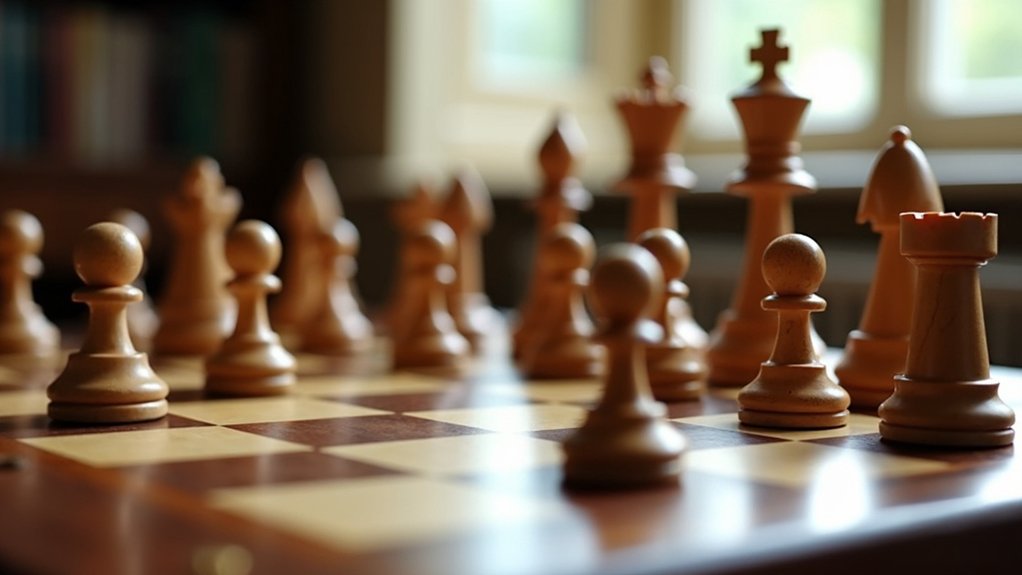
Now it’s time to place the rooks, knights, and bishops on the chessboard.
Start with the rooks, which go in the corners. Their movement is straight along rows and columns, making them powerful. Rooks are vital for controlling open files, allowing you to dominate the board.
Next, position the knights next to the rooks. Knights move in an “L” shape, jumping over other pieces, enhancing your piece coordination.
Finally, place the bishops beside the knights. The bishops move diagonally, so think about your bishop strategy. Keeping them on opposite colors can control more squares.
With these pieces set, you’re ready to advance your game.
Arranging the Kings and Queens
After you’ve placed the rooks, knights, and bishops, it’s time to set the kings and queens on the chessboard.
Start by placing your queen on her color. If you have a white queen, put her on the white square, and the same goes for the black queen. This is crucial for proper queen placement.
Next, position your king next to the queen. Make sure to keep your king safe, as he’s the most essential piece. Remember that each player has 16 pieces total, which includes the king and queen among other essential pieces.
Now you’ve arranged your kings and queens correctly. Double-check their positions to confirm everything is set for your game ahead.
Double-Checking Your Setup
Once you’ve arranged your kings and queens, it’s a good idea to double-check your setup.
Start by checking alignment. Make sure the board is oriented correctly, with a white square in the bottom right corner.
Next, verify piece placement. Each side should have two rooks, knights, bishops, a queen, and a king on the first row. The queens should match their colors, meaning the white queen goes on the white square.
Lastly, confirm the pawns are in the second row, ready to advance. Taking these steps guarantees you’re ready for a fair game of chess, as proper chessboard setup is essential for starting correctly.
Common Mistakes to Avoid
Many players make common mistakes when setting up a chess board, which can lead to confusion during the game. One frequent error is placing the rooks in the wrong corners. Remember, they belong on the outer edges.
Another setup mistake is misaligning the pieces. Confirm each player has a white square on the right corner.
Don’t forget to place pawns in the second row. Leaving them out can disrupt your strategy.
Finally, check that all pieces are facing the correct direction. Misplaced pieces can confuse you and your opponent.
Avoid these common errors to play smoothly and confidently. Understanding the learning curve of chess can also help you appreciate the importance of proper setup.
Ready to Play: Starting the Game
Now that your chess board is set up correctly, it’s time to get started with the game. First, decide who plays white and who plays black; white always moves first.
Before you make your move, think about your opening strategies. These are the first few moves that set the tone for the game.
Remember to practice good game etiquette. This means being respectful, not talking during your opponent’s turn, and shaking hands before and after the game.
Focus on your moves, and think ahead. Enjoy the challenge, and remember that practice is key to improving your skills.
FAQs
Can I Use a Different Board Size for Chess?
Yes, you can use alternative board sizes for chess, but it depends on the chess variant rules you choose to follow.
Standard chess is played on an 8×8 board, but some variants allow for different sizes, like 10×10 or 6×6.
Make sure you understand the specific rules for the variant you’re playing, as they may affect piece movement and game strategy.
Always check the rules before starting a game on a non-standard board.
Is It Necessary to Have a Chess Clock?
You don’t need a chess clock, but it has benefits. A chess clock tracks time for each player, helping you manage your moves.
It’s especially useful in tournament settings where rules often require it. Using a clock adds excitement and urgency to the game, improving focus.
If you play casually, a clock isn’t necessary, but it can enhance your skills and make matches more competitive. Consider using one if you want to challenge yourself.
How Do I Clean My Chess Pieces?
To clean your chess pieces, first identify the materials, like wood, plastic, or metal.
For wooden pieces, use a soft cloth and mild soap, avoiding excess water.
For plastic pieces, a damp cloth works well.
If your pieces are metal, use a metal cleaner with a soft cloth, and dry them immediately.
Avoid harsh chemicals, as they can damage the finish.
Regular cleaning keeps your chess pieces looking great and extends their lifespan.
Can I Customize My Chess Pieces?
Yes, you can customize your chess pieces. Many companies offer custom piece designs, allowing you to choose colors, shapes, or themes.
You can even create personalized chess sets that reflect your interests or hobbies.
To start, research online retailers or local shops that specialize in custom chess sets.
Once you find a provider, decide on the design, materials, and any special requests.
This way, you’ll have a unique set that’s all your own.
Where Can I Buy a Chess Set?
You can buy a chess set in several places. Start by checking online retailers, like Amazon or Walmart, where you’ll find a wide variety of options.
If you prefer shopping in person, visit local stores, such as toy shops or game stores. They often carry chess sets too.
Make sure to compare prices and styles, so you choose the set that fits your needs best. Happy shopping!
Final Thoughts
Now that you know how to set up a chess board, you’re ready to play. Remember to check the board’s orientation, and place your pieces correctly. Pawns go in front, while the rooks, knights, bishops, kings, and queens have their specific spots. Double-check your setup to avoid mistakes. With practice, you’ll gain confidence in arranging the board. Follow these steps each time you play, and soon, setting up will become second nature. Enjoy your game!


