
Yes, all chess matches are unique. Each game has different moves and strategies due to choices made by the players. Chess is played on an 8×8 board with pieces that move in specific ways, like rooks moving straight. The opening moves can set the tone for the game. Players use patterns and tactics to gain advantages. Even if two players play the same openings, their moves will differ, creating distinct matches. You’ll discover more about this uniqueness as you explore further.
The Fundamentals of Chess: Rules and Objectives
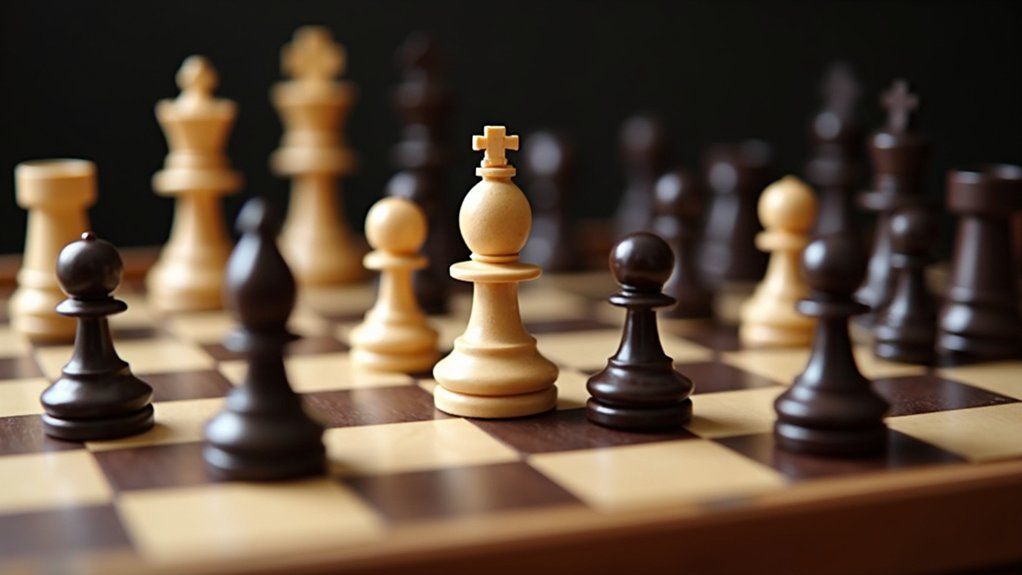
Chess is a game played on an 8×8 board, where two players compete to checkmate the opponent’s king. Each player starts with 16 chess pieces, including pawns, knights, bishops, rooks, a queen, and a king.
The objective is to capture the opponent’s king while protecting your own. Players move their chess pieces according to specific rules. For example, rooks move in straight lines, while bishops move diagonally.
Understanding these basics helps you grasp the game. Focus on positioning your pieces effectively and controlling the center of the game board. Additionally, mastering common opening strategies can significantly enhance your chances of success in matches.
This foundation is essential for improving your chess skills.
The Role of Opening Theory in Chess
When you start a chess game, knowing opening theory can give you a big advantage.
Opening strategies are the first few moves you make and set the tone for the game. By understanding these strategies, you can develop a strong position early on.
Theoretical knowledge helps you recognize patterns and respond effectively to your opponent’s moves. You’ll want to study popular openings, like the Ruy Lopez or Sicilian Defense, to see their strengths and weaknesses.
This understanding allows you to make smart decisions, control the center, and prepare for the middle game, improving your chances of winning. Moreover, focusing on fundamental openings can provide a solid foundation for young players as they learn essential chess principles.
Patterns and Tactics: Recognizing Common Strategies
Recognizing patterns and tactics is essential for improving your chess game. Start by identifying tactical patterns, which are recurring configurations that lead to advantages. Look for strategic themes, like controlling the center or developing pieces efficiently.
Be aware of common traps, where opponents might fall into mistakes. These traps can help you gain a winning edge.
Positional play involves understanding piece placement and long-term advantages. Focus on improving your position gradually, rather than seeking quick wins. Furthermore, mastering control of the board through effective piece development can significantly enhance your overall strategy.
The Impact of Player Skill on Game Dynamics
Player skill greatly influences game dynamics. Higher player experience leads to better decision-making, strategic planning, and tactical execution.
When you face an opponent with significant skill disparity, the game often shifts. The stronger player can predict your moves, forcing you into a defensive position.
In contrast, if you’re evenly matched, the game becomes more competitive and unpredictable. Each player’s unique style creates a dynamic flow, making it harder to anticipate moves.
Understanding these differences helps you recognize how skill levels impact the game. Keep practicing to improve your skills, and over time, you’ll notice how your game dynamics change. Additionally, recognizing your current chess rating system can provide insight into your progress and areas for improvement.
Famous Matches: Learning From the Greats
Famous chess matches offer valuable lessons that can improve your game. By studying legendary games, you can learn important strategies used by the best players. Each match showcases unique tactics, helping you understand different styles of play.
Analyze the moves made by grandmasters. Notice how they control the center of the board or develop their pieces efficiently. These strategic lessons teach you about positioning and timing. Additionally, understanding basic tactics can significantly enhance your overall gameplay.
When you apply these insights to your own matches, you’ll make smarter decisions.
Psychological Factors in Chess Matches
While chess is often seen as a battle of wits, the mental game plays an essential role in the outcome of each match. You must understand mind games, which are tactics players use to confuse or unsettle their opponents. Staying focused and calm is important.
Emotional resilience, or the ability to recover from setbacks, is also critical. When you lose a piece or face a tough position, maintaining your composure helps you think clearly.
Recognizing these psychological factors can improve your performance. By mastering both strategy and mindset, you’ll become a stronger chess player, ready for any challenge. Additionally, studies show that regular chess practice can enhance problem-solving skills, further supporting your ability to navigate the complexities of the game.
The Evolution of Chess: Variations and Innovations
Chess has changed a lot since it first appeared many centuries ago. You can trace its evolution through various chess variants, which are different forms of the game with unique rules and pieces.
For example, Shogi and Xiangqi are popular in Japan and China, respectively. These historical adaptations reflect different cultures and styles of play. They offer new challenges and strategies for players. Chess’s origins can be traced back to its likely beginnings in India around the 6th century as the game “chaturanga.”
FAQs
Do Chess Matches Follow a Strict Time Limit?
Yes, chess matches usually follow strict time limits, known as time controls.
These regulations determine how long each player has to make their moves.
Common formats include classical, rapid, and blitz games, which vary in time allowed.
In classical chess, players might get several hours, while blitz games may only give a few minutes.
Understanding these time controls helps you manage your decisions and strategy effectively during the match.
How Does Weather Affect Outdoor Chess Matches?
Weather can greatly impact outdoor chess matches. Rain might make the pieces slippery, while wind can blow them off the board.
If it’s too hot, players might get tired and lose focus. You need to check the weather conditions before playing. If it’s too windy or rainy, consider moving indoors.
Staying comfortable helps you think better and play your best game. Always be prepared for changing outdoor conditions to enjoy chess.
Can Chess Games End in a Draw?
Yes, chess games can end in a draw. There are specific draw conditions to be aware of.
One common scenario is stalemate, which happens when a player has no legal moves but isn’t in check.
Another situation is insufficient material, where neither player can checkmate the other.
You may also encounter threefold repetition, where the same position occurs three times.
Finally, mutual agreement between players can also lead to a draw.
What Are the Most Common Chess Opening Choices?
In chess, players often choose popular openings to gain an advantage.
The Italian Game focuses on quick development and control of the center.
The Sicilian Defense counters 1.e4 with 1…c5, aiming for an aggressive counterattack.
The French Defense, starting with 1.e4 e6, prepares to challenge the center later.
Finally, the King’s Gambit, initiated by 1.e4 e5 2.f4, seeks rapid piece development through a pawn sacrifice.
Each opening has its unique strategies and goals.
Are There Chess Matches With No Winner?
Yes, there are chess matches with no winner. This outcome is known as a stalemate.
A stalemate occurs when a player has no legal moves, but their king isn’t in check. In this case, the game ends with no result.
Another situation that leads to no winner is a draw by agreement. Players can agree to end the game without a winner at any time.
In both cases, the match concludes without a victor.
Final Thoughts
To summarize, chess matches can seem unique, but many patterns repeat. Players use strategies and openings that have been studied for years. Your skill level greatly affects how the game unfolds. By learning from famous matches and understanding psychological factors, you can improve. As chess continues to evolve with new variations, it’s important to adapt. Always remember, practice and study can help you recognize patterns and enhance your game. Keep playing and learning to see your growth.


