

To teach kids chess, start with the basics. Explain the chessboard and each piece’s movement. Next, use interactive tools, like apps and online resources, to help them learn. Incorporate fun activities, such as puzzles and games, to engage their minds. Organize friendly competitions, like mini tournaments, to practice strategies and build sportsmanship. Finally, encourage creativity by letting kids invent their own chess variants. This approach builds a strong foundation and makes learning enjoyable, leading to deeper understanding.
Start With the Basics: Understanding the Chessboard and Pieces

To start teaching chess, you need to understand the chessboard and its pieces. The chessboard has 64 squares, arranged in an 8×8 grid. Each player has 16 pieces: 1 king, 1 queen, 2 rooks, 2 knights, 2 bishops, and 8 pawns.
Familiarize yourself with chess terminology, like “check” and “checkmate.” Each piece has unique movements; for example, rooks move in straight lines, while knights move in an L-shape.
Understanding these movements is essential for gameplay. Use this knowledge to explain how each piece interacts on the board, laying a solid foundation for your students. Additionally, teaching them about common opening strategies can help spark their interest in the game and enhance their tactical understanding.
Use Interactive Tools: Apps and Online Resources
Many great resources can help you teach chess to kids effectively. Chess apps are a fantastic way to engage young learners. They offer interactive lessons, puzzles, and practice games that make learning fun. You can find apps tailored for beginners, which simplify the rules and strategies.
Online tutorials are another valuable resource. They provide step-by-step instructions and visual aids, helping kids grasp concepts quickly. Many tutorials include videos, making it easier for visual learners to understand. Additionally, many of these platforms offer interactive tutorials that guide players through the basic rules of chess, making it easier for kids to start learning.
Incorporate Fun Activities: Chess Puzzles and Games
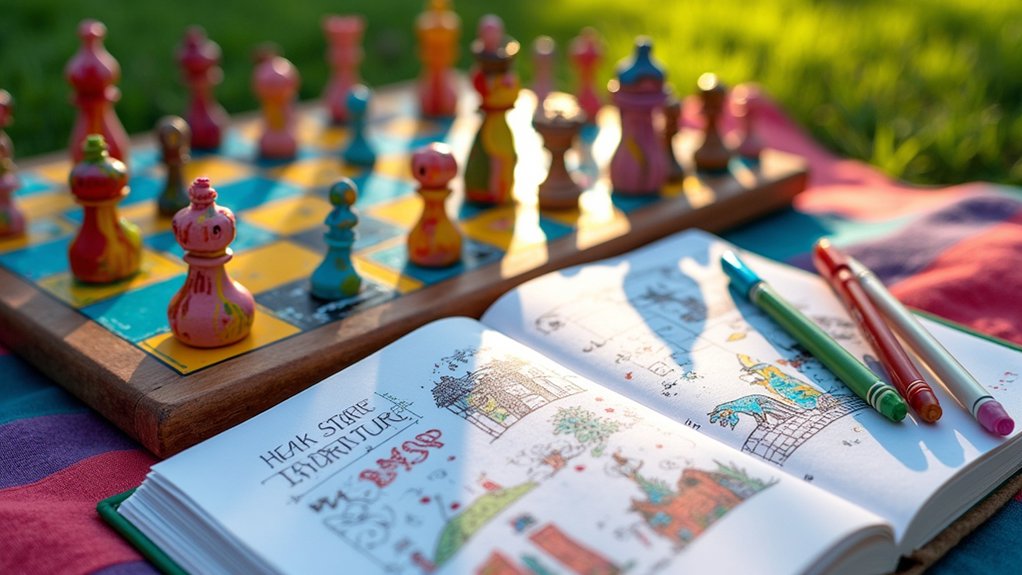
Incorporating fun activities like chess puzzles and games can make learning chess more enjoyable for kids. You can create engaging chess puzzles that challenge their problem-solving skills.
Set up a chess-themed craft session where kids design their own chess pieces or boards.
Additionally, storytelling sessions can bring chess concepts to life. Share tales of famous chess games or invent stories where pieces set out on exciting adventures. These activities not only enhance their understanding of chess but also keep them interested and motivated. By mixing fun with learning, kids can develop a love for the game while improving their skills. Furthermore, chess encourages children to analyze multiple possibilities, think several moves ahead, and develop both creativity and logical reasoning simultaneously.
Organize Friendly Competitions: Mini Tournaments
When kids play in friendly competitions like mini tournaments, they learn valuable lessons about strategy, sportsmanship, and teamwork. To organize a mini tournament, choose a suitable tournament format, like round-robin or knockout. Each format has its own rules, so explain these clearly to the kids.
Set a date and location for the tournament, ensuring it’s convenient for everyone. Consider adding prize incentives, such as medals or small trophies, to motivate the participants.
Encourage kids to support each other during matches, reinforcing good sportsmanship. After the tournament, gather feedback to improve future events, making each competition more enjoyable and educational. Additionally, consider utilizing local chess clubs to help promote the tournament and attract more participants.
Encourage Creativity: Let Kids Create Their Own Chess Variants

Encouraging kids to create their own chess variants can spark their imagination and deepen their understanding of the game.
Let them invent creative rules, like changing how pieces move or adding new pieces with unique abilities.
Ask them to think about how these changes affect strategy and gameplay. For instance, they might design imaginative pieces that can jump over others or capture in unexpected ways.
Once they’ve created their variants, play together to test their ideas.
This hands-on experience helps them learn problem-solving skills and enhances their appreciation for traditional chess. Additionally, they can apply concepts like controlling the center to see how it influences their variants.
Plus, it’s a fun way to explore their creativity!
FAQs
What Age Is Best to Start Teaching Kids Chess?
You can start teaching kids chess around age 6. At this age, their cognitive development allows them to understand basic rules and strategies.
They can also begin to develop social skills, like taking turns and respecting opponents. As they play, they learn to think critically and solve problems.
Make sure to introduce the game in a fun way, so they stay engaged and excited about learning. This foundation can support their growth in other areas, too.
How Can I Keep Kids Motivated to Learn Chess?
To keep kids motivated to learn chess, use reward systems. This means giving them small prizes or points for achieving goals, like winning a game or mastering a new tactic. Set clear objectives, so they know what to aim for.
Incorporate engaging activities, like chess puzzles or timed matches, to make practice fun. These activities help kids stay interested and develop their skills.
Adjust challenges to their level, ensuring they always feel a sense of progress.
What Are Common Mistakes Kids Make When Learning Chess?
When kids learn chess, they often make common mistakes. One mistake is overthinking moves. This means they spend too much time considering their options, which can lead to confusion and missed opportunities.
Another mistake is neglecting tactics. Tactics are short-term strategies that can help win pieces or gain an advantage.
Encourage kids to focus on simple tactics and make decisions more quickly, rather than getting stuck in their heads. This will help improve their game.
How Do I Handle Kids’ Frustration During Learning?
When kids feel frustration during learning, it’s important to help them cope effectively.
First, acknowledge their feelings, encouraging them to express their thoughts. Use positive reinforcement, like praise, to highlight their efforts, even small ones.
Break down complex tasks into smaller steps, making the game feel less overwhelming. Encourage them to take breaks when needed, allowing their minds to reset.
This approach helps build resilience and confidence, making learning more enjoyable.
Can Chess Improve Kids’ Academic Performance?
Yes, chess can improve kids’ academic performance. It enhances cognitive development, which means it helps their brain grow and work better.
Playing chess requires strategic thinking, or planning ahead, which also benefits problem-solving skills in school subjects.
Kids learn to anticipate opponents’ moves, sharpening their focus and patience. These skills translate into better attention in class and improved grades.
Regular practice can lead to noticeable academic improvement over time.
Final Thoughts
Teaching chess to kids can be rewarding. Start with the basics, explaining the chessboard and pieces. Use interactive tools, like apps, to keep their interest. Incorporate fun activities, such as puzzles, to enhance their skills. Organize friendly competitions to motivate them. Finally, encourage creativity by letting them invent their own chess variants. By following these methods, you’ll create a positive learning environment that helps kids enjoy and excel at chess.


