

The queen is the most powerful piece in chess, moving any number of squares vertically, horizontally, or diagonally. This means it can control large areas of the board and attack multiple pieces at once. In your opening, develop your queen safely while controlling the center. During the midgame, use the queen to create threats and pressure your opponent. Avoid common mistakes like exposing the queen unnecessarily. Keep learning about its role for more effective strategies and plays.
The Historical Evolution of the Queen in Chess
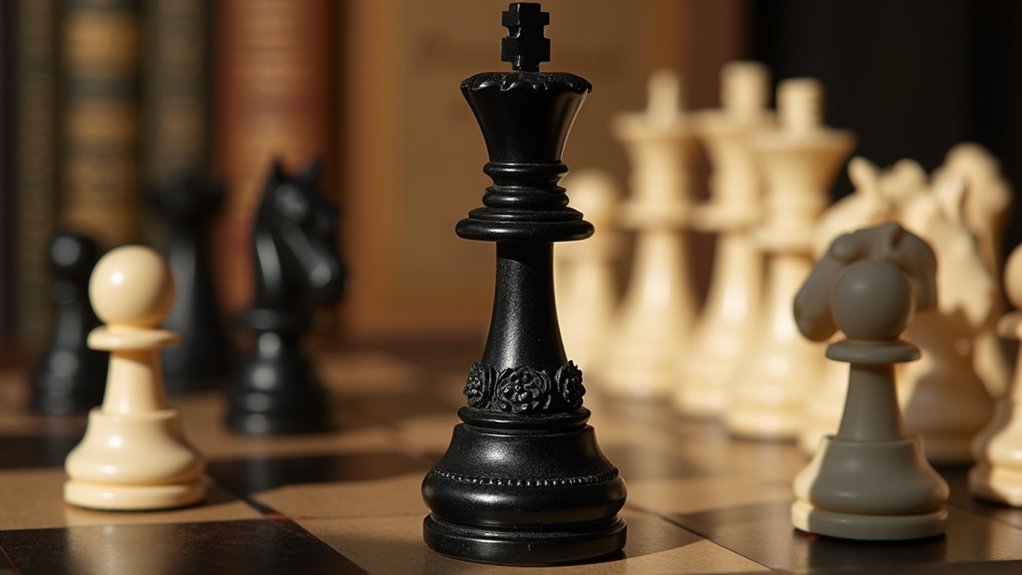
The queen in chess has come a long way since the game’s early days. Initially, the piece represented a weaker character, often a counselor to the king. Over time, it evolved into the most powerful piece on the board.
The queen’s origin can be traced back to the game of Chaturanga in India, where it was known as the “mantri,” meaning advisor.
As the game spread to Europe, the piece transformed into the queen, symbolizing female power and influence. This change reflects societal views on women, showcasing the queen’s symbolism as a figure of strength and authority in chess. Notably, the queen’s ability to move any number of squares horizontally, vertically, or diagonally highlights its strategic importance in gameplay.
The Queen’s Unique Movement and Abilities
With its rise in power, the queen’s movement and abilities set it apart from other chess pieces. The queen can move any number of squares in straight lines—vertically, horizontally, or diagonally. This flexibility allows you to control large areas of the board.
The queen’s abilities make it one of the most powerful pieces in chess. It can attack multiple pieces at once, creating threats and opportunities.
You can use the queen to support your other pieces or to capture your opponent’s pieces effectively. Understanding the queen’s movement and abilities is essential for becoming a better chess player. Additionally, the queen’s value is often expressed in piece values, which helps players assess its importance in various positions on the board.
The Role of the Queen in Opening Strategies

When you start a chess game, positioning your queen effectively is essential for a strong opening strategy. Focus on queen development by moving her out early, but don’t rush.
Follow opening principles like controlling the center and supporting your pawns. Place your queen on squares where she can influence the game, while ensuring she’s safe from attacks.
Avoid moving her too many times in the opening, as this can waste valuable moves. Instead, develop your other pieces.
When your queen is well-placed, she’ll support your strategy and help you gain an advantage as the game progresses. Additionally, mastering fundamental openings will provide a solid framework for utilizing your queen effectively in various positions.
Midgame Tactics: Maximizing the Queen’s Potential
Maximizing your queen’s potential during the midgame can greatly influence the outcome of your chess match. Your queen can control many squares, making it a powerful piece for creating tactical threats.
Look for opportunities to attack your opponent’s pieces while keeping your own safe. Sometimes, queen sacrifices can lead to greater advantages. By offering your queen, you can lure your opponent into a trap or gain material in return.
Always consider the position before making such sacrifices, as they can shift the game’s momentum. Use your queen wisely to dominate the board and set up winning strategies. Understanding the concept of gambits in chess can also enhance your overall tactical approach.
The Queen in Endgame Scenarios
The queen plays an essential role in endgame scenarios, especially as the board empties and pieces become fewer. In these situations, your queen can control key squares and support your pawns’ promotion.
Utilizing endgame strategies is important. You should aim to position your queen where it threatens the opponent’s pieces while defending your own.
Sometimes, queen sacrifices can lead to a checkmate or significant material gain. Be prepared to trade your queen for a stronger position if it means victory.
Always evaluate your moves carefully, as the queen’s power can turn the tide in your favor or lead to defeat. Understanding concepts like opposition can enhance your ability to capitalize on your queen’s strengths in endgame scenarios.
Famous Games Featuring the Queen’s Dominance
Famous chess games often highlight the queen’s power and influence on the board. Many historical queens dominate through clever tactics, like queen sacrifices that lead to victory.
One famous game showcases a brilliant queen trap, where a player outmaneuvers their opponent, leaving them with no escape.
These strategies emphasize the importance of the queen in achieving checkmate. Famous queens, like those played by grandmasters, demonstrate how to control the game. In many of these games, the Queen’s Gambit serves as a key opening that allows players to assert their dominance early on.
Common Mistakes to Avoid With the Queen
While playing chess, you might overlook some common mistakes with your queen. One mistake is making a queen sacrifice without a clear plan, which can lead to losing a powerful piece without gaining any advantage.
Also, guarantee proper queen coordination with your other pieces. A lone queen can become vulnerable if not supported by pawns or knights.
Avoid moving your queen too early in the game, as it can expose her to attacks.
Finally, don’t underestimate the importance of positioning; controlling central squares with your queen can give you a strategic edge. Focus on these areas to improve your game. Additionally, be mindful of the relative value of chess pieces, as understanding this can help you make better decisions regarding your queen’s movements and trades.
The Psychological Impact of the Queen on Opponents
Confidence often plays a significant role in chess, especially when it comes to the queen. The queen’s power can create a sense of psychological warfare against your opponents.
When you control the queen effectively, it can intimidate them, making them second-guess their moves.
Using intimidation tactics, like placing your queen in threatening positions, forces your opponent to feel pressured. This pressure can lead to mistakes, as they might rush their decisions. Additionally, understanding the importance of center control can further enhance your queen’s effectiveness, giving you a strategic advantage over your opponent.
Tips for Developing a Strong Relationship With Your Queen
To develop a strong relationship with your queen, you should start by understanding her role on the chessboard. The queen is the most powerful piece, capable of moving in any direction. Good queen positioning means placing her where she controls key squares and supports your other pieces.
Always be mindful of her safety; avoid risky moves that could lead to her capture. Sometimes, you’ll need to make strategic sacrifices, trading her for a stronger position or to gain material advantage.
Keep her active throughout the game, as a well-placed queen can create threats and pressure on your opponent’s defenses.
FAQs
What Is the Origin of the Term “Queen” in Chess?
The term “queen” in chess comes from the word “quean,” meaning a woman or wife, which evolved over time.
It reflects the piece’s historical significance, as it originally represented a weaker piece, often a counselor to the king. As chess evolved, the queen gained power and versatility, becoming the strongest piece on the board.
This change mirrored societal shifts, highlighting women’s growing roles in various cultures. Understanding this etymology helps you appreciate the game’s history.
How Does the Queen Compare to Other Chess Pieces Historically?
Historically, the queen has evolved to become the most powerful piece in chess.
In the early versions of the game, it was weaker, moving only one square at a time. Over time, its movement expanded, allowing it to move diagonally and vertically any number of squares.
This change shifted the piece hierarchy, making the queen more valuable than knights and bishops.
Today, it plays a vital role in strategy and game dynamics.
Can the Queen Be Promoted in Chess?
Yes, the queen can be promoted in chess, but this happens under specific conditions.
Queen promotion occurs when a pawn reaches the opposite side of the board. You replace the pawn with a queen, considerably enhancing your chess strategy.
This new queen can move across the board, making it a powerful asset in your game.
Are There Variations of Chess Where the Queen’s Role Differs?
Yes, there are chess variations where the queen’s role changes. In some games, the queen’s movement can be limited, making it less powerful.
For example, in “Chess960,” the starting position of pieces varies, affecting how each piece, including the queen, moves. Other variations might have unique rules about the queen’s abilities or how many queens each player can have.
Understanding these queen variations helps you adapt your strategy in different chess games.
How Does the Queen Influence Chess Culture and Terminology?
The queen symbolizes power and control in chess culture. This influence shapes how players view strategy.
You often hear phrases like “queen’s gambit,” which refer to certain tactics involving the queen. By using the queen effectively, you can control the board and dictate the flow of the game.
Understanding her role can enhance your chess strategy, making you a stronger player. Keep practicing, and you’ll grasp her importance in every match.
Final Thoughts
In chess, the queen is your most powerful piece. Understanding her movement and abilities helps you play better. Use her wisely in each phase of the game, from opening to endgame. Avoid common mistakes, and remember how she can affect your opponent’s strategy. By developing a strong relationship with your queen, you can maximize her potential. Keep practicing, and you’ll see improvement in your chess skills. The queen can lead you to victory when used effectively.


