

A typical chess match can last anywhere from a few minutes to several hours. For quick play formats, like blitz, games usually take 3 to 10 minutes per player. Rapid matches last longer, around 10 to 60 minutes. Classical chess games can span many hours, focusing on deeper strategies. Different tournament formats, like knockout or round-robin, also affect match duration. The time control you choose influences how fast or slow the game progresses. Discover more about chess time controls.
Understanding Time Controls in Chess

Understanding time controls is vital for your game strategy. You need to manage your time wisely, balancing between making strong moves and avoiding time pressure. If you run out of time, you lose, even if you’re ahead on the board. By practicing under different time controls, you’ll improve your ability to think quickly and effectively during matches. Additionally, mastering time management techniques can help you stay calm and focused when the clock is ticking down.
Blitz and Rapid Matches: Quick Play Formats
Blitz and rapid matches offer fast-paced excitement for players who enjoy quick thinking and swift decision-making.
In blitz chess, each player typically gets 3 to 10 minutes to finish their game. Rapid matches allow 10 to 60 minutes per player.
In these formats, you need to employ effective blitz strategies, which focus on speed and tactical awareness.
Prioritize quick moves and simplify the position when possible. For rapid tactics, you can take a bit more time but still must think quickly.
Always stay alert, anticipate your opponent’s moves, and be ready to adapt your plan on the fly. The reduced time in blitz chess creates an environment that emphasizes quick thinking and pattern recognition, making it essential to develop these skills for success.
Classical Chess: The Long Game
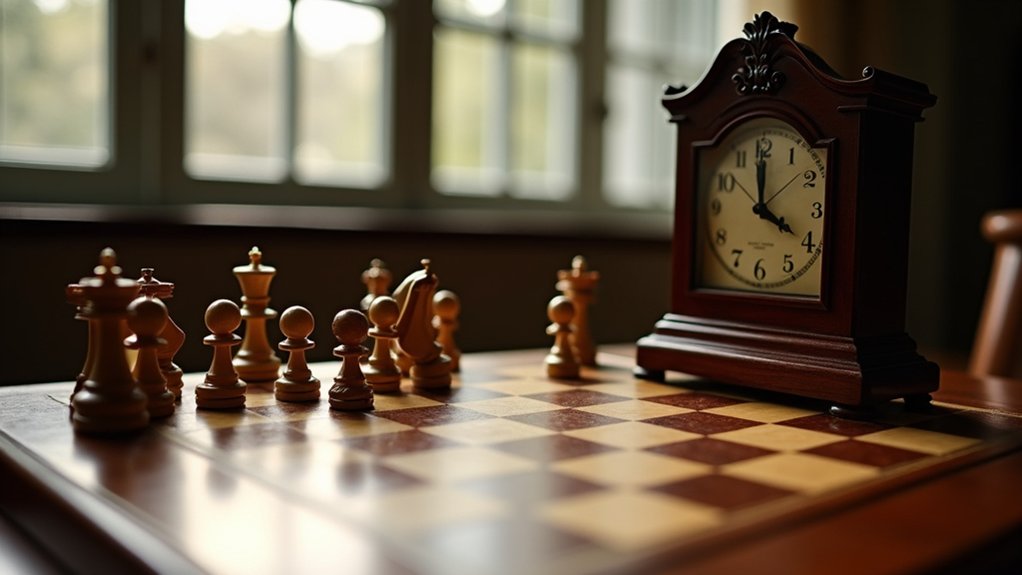
Classical chess is known for its depth and strategy, requiring players to think carefully over a longer period. In this format, matches can last several hours, allowing for extensive strategic planning. You must consider each move, weighing its potential impact on the game.
Psychological endurance is vital, as maintaining focus over long periods can be challenging. You’ll face mental fatigue, so it’s essential to stay calm and composed.
Proper time management helps you make the best decisions without rushing. Overall, classical chess offers a rich experience that tests both your intellect and stamina, making every match a unique challenge. Additionally, studying grandmaster games can provide insights into advanced strategies and enhance your understanding of the game.
Tournament Formats and Their Impact on Match Length
Tournament formats can greatly influence how long a chess match lasts. Different tournament structures, like round-robin or knockout, affect match scheduling. In a round-robin, each player faces every other player, which can extend the tournament duration.
Conversely, knockout formats eliminate players after a loss, leading to shorter matches overall.
Additionally, time controls, or the rules governing how long players have to make their moves, vary by format. Faster time controls result in quicker games, while classical formats take longer.
Understanding these structures helps you grasp why some tournaments feel longer than others. Moreover, the growing popularity of rapid formats is influencing how tournaments are structured and can lead to quicker match durations.
Factors Influencing Game Duration

Many factors influence how long a chess game lasts. Player strategies play a big role. If you focus on aggressive tactics, the game might end quickly.
On the other hand, defensive strategies can lead to longer matches.
Psychological pressure affects the duration too. When you feel stress or tension, you might take more time to think through moves. This can extend the game, as you weigh your options carefully.
Additionally, the time control format impacts how long a match lasts. Faster formats push players to make quicker decisions, while slower formats allow for deeper thinking and longer games.
Effective piece development can also lead to quicker victories, as players who master this concept often capitalize on their opponents’ weaknesses more efficiently.
FAQs
What Is the World Record for the Longest Chess Match?
The world record for the longest chess match is 269 moves. This match happened in 1989 between Nikolić and Arsović. It lasted over 20 hours, showcasing incredible endurance.
In chess history, this match is one of the most famous because it highlights the game’s complexity.
Matches like this demonstrate the strategic depth of chess, where players think many moves ahead. Understanding these records helps you appreciate the game’s challenges and excitement.
How Do Player Ratings Affect Match Duration?
Player ratings influence match duration by affecting match strategy. Higher-rated players often take more time to think, as they analyze their opponent’s moves carefully. This careful consideration can lead to longer matches.
In contrast, lower-rated players may play more quickly, as they rely on instinct rather than deep analysis.
Rating systems, which rank players based on their performance, can shape how seriously they approach the game, impacting the time spent during matches.
Are Chess Matches Longer for Beginners or Experienced Players?
Chess matches tend to be longer for beginners than for experienced players.
Beginners often use basic strategies, focusing on simple moves and learning the rules. This can make their games slow, as they think carefully about each decision.
On the other hand, experienced players employ advanced tactics, allowing for quicker play. They recognize patterns and make faster decisions.
Consequently, as you gain experience, your matches will likely become shorter and more efficient.
Can External Factors Delay a Chess Match?
Yes, external factors can delay a chess match. For instance, players may need extra time for breaks or to resolve disputes.
Time management is essential; if a player runs out of time, it can affect the match’s outcome.
Additionally, tournament regulations may impose rules about how long matches can last, including delays due to technical issues or player requests.
Always check the specific tournament rules for clarity on these delays.
How Do Different Chess Variants Impact Game Length?
Different chess variants can greatly impact game duration. Some variants, like Blitz or Bullet, use shorter time controls, leading to faster games.
Others, such as Chess960, may take longer due to unfamiliar setups.
When you play chess variants, keep in mind that the rules and time limits influence how long a game lasts.
Faster games focus on quick thinking, while slower games allow for deeper strategy.
Choose a variant that fits your desired game duration.
Final Thoughts
To sum up, the length of a chess match varies based on the format. Blitz games are quick, lasting about 10 to 15 minutes, while classical games can last several hours. Tournaments can also affect match duration, depending on how many rounds are played. Factors like player skill and time control rules play a role too. Understanding these aspects helps you know what to expect when playing or watching chess, making the game more enjoyable and engaging.


