

To defend against attacks in chess, start by coordinating your pieces. Keep them close to protect each other. Recognize common threats by evaluating your opponent’s active pieces and spotting potential traps. Build a solid pawn structure to control key squares and protect your position. Use your pieces effectively, adjusting their placement based on threats. Look for counterattacks that can shift the game’s momentum in your favor. Explore more techniques to enhance your defensive strategy.
Understanding Piece Coordination

When you play chess, understanding how your pieces work together is key to defending your position. This concept is called piece synergy. It means that your pieces support each other to create a stronger defense.
To achieve tactical harmony, position your pieces so they can protect one another. For example, a knight can guard a bishop, while both can threaten an opponent’s pawn.
Always look for ways to connect your pieces. This coordination helps you respond effectively to threats. Additionally, maintaining center control enables better piece coordination and enhances your defensive capabilities.
Recognizing Common Threats
Understanding how your pieces work together helps you see the threats your opponent might pose. Start with threat identification, which means recognizing when your opponent aims to capture one of your pieces. Look for checks, forks, and pins, as these are common tactics.
Next, improve your tactical awareness by evaluating each move. Ask yourself what your opponent’s last move reveals. Are they setting up a trap?
Lastly, pay attention to their piece activity. Active pieces can create more threats. By consistently reviewing the board for potential dangers, you’ll defend against attacks more effectively and keep your pieces safe. Additionally, engaging in regular chess practice can strengthen neural connections, enhancing your ability to anticipate and respond to threats on the board.
Creating a Solid Pawn Structure
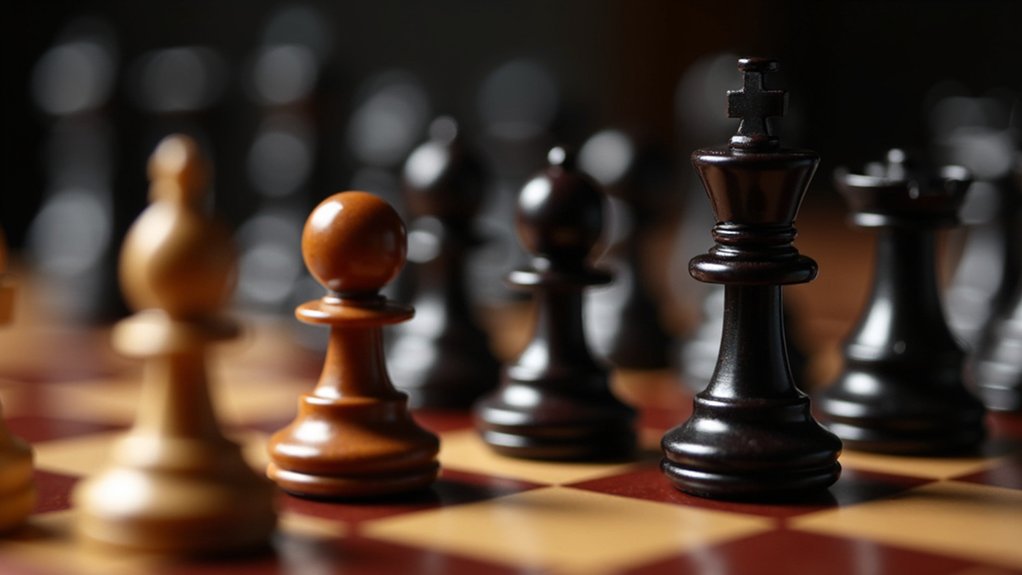
A solid pawn structure is essential for a strong defense in chess. It helps protect your pieces and controls important squares. Use pawn formation strategies to create a strong line of defense. Place pawns in a way that supports each other, forming chains or blocks.
Be aware of pawn structure weaknesses, like isolated or doubled pawns. These can become easy targets for your opponent. Avoid creating holes in your formation that can let enemy pieces infiltrate. Additionally, remember that pawns can control space effectively, limiting your opponent’s options and enhancing your defensive strategy.
Utilizing Defensive Resources
Using your defensive resources effectively can greatly enhance your chess game. First, identify your pieces that can support others. This is essential for developing strong defensive strategies. For instance, rooks can defend pawns, while knights can block attacks.
Next, practice resource management by allocating your pieces wisely. Don’t leave them isolated; instead, keep them in formation to protect one another.
Always be aware of potential threats and adjust your resources accordingly. Use your pieces to create a fortress around key areas. Proper piece development is crucial to ensure that your defensive setup is robust and can withstand attacks.
The Importance of King Safety

King safety is essential in chess. If your king is safe, you can focus on attacking your opponent. Proper king positioning helps avoid threats, keeping your pieces secure.
One effective way to guarantee king safety is by castling. Castling is a special move that allows you to move your king to safety while also developing a rook. It’s important to castle early in the game, as it protects your king and connects your rooks.
Always remember to keep your king away from the center, especially in the opening. This way, you reduce the risk of being attacked. In the endgame, however, your king should become an active fighter and move toward the center to support your pieces.
Counterattacking Opportunities
Counterattacking opportunities are essential in chess. They allow you to turn the tables on your opponent when they attack. By using counterplay strategies, you can find ways to create threats against your opponent while defending your position.
Look for tactical motifs, like forks and pins, that can help you gain an advantage. When your opponent makes a strong move, think about how you can respond with a strong counter. This can catch them off guard and change the game’s momentum.
Always be aware of your pieces’ positioning, as this can open up new avenues for counterattacks. Additionally, understanding the importance of controlling the center can significantly enhance your counterattacking opportunities.
Recognizing and Avoiding Traps
Have you ever fallen for a clever trap in chess? Trap identification is essential for your success. Always be aware of your opponent’s possible moves, and think about their tactics.
To avoid traps, maintain tactical awareness. Before making a move, ask yourself if your opponent is setting up a trap. Look for patterns that commonly lead to traps, like overextending pieces or ignoring threats.
If you notice an unusual move, pause and analyze it. Consider potential consequences before proceeding. Understanding sound opening principles can significantly enhance your ability to recognize and counteract potential traps.
Practicing Defensive Scenarios
Practicing defensive scenarios is a key part of improving your chess skills. You can use tactical drills to simulate various attack situations. These exercises help you recognize threats and develop your defensive responses. In scenario analysis, you review past games or setups where you’ve faced attacks. Identify the best moves to counter your opponent’s strategies. Additionally, understanding common blunders in chess can help you avoid costly mistakes during defensive play.
FAQs
How Can I Improve My Overall Chess Strategy for Defense?
To improve your overall chess strategy for defense, focus on recognizing tactical patterns.
These are common setups you’ll see in games.
Develop a defensive mindset by anticipating your opponent’s moves.
Always ask yourself how they might attack next.
Practice protecting key pieces and controlling the center of the board.
Study past games to learn from defensive mistakes.
Regularly analyze your games to spot weaknesses.
This will enhance your overall game strategy.
What Are the Best Openings for a Defensive Play Style?
For a defensive play style, consider using openings like the Caro-Kann or the French Defense.
These defensive openings focus on solid pawn structure, which means your pawns work together to protect your pieces.
In the Caro-Kann, you play 1.e4 c6, preparing to control the center.
With the French Defense, you respond to 1.e4 with 1…e6, creating a strong barrier.
Both options help you build a sturdy position and respond to attacks effectively.
How Do I Analyze My Defensive Mistakes After a Game?
To analyze your defensive mistakes after a game, start by reviewing the moves where you felt pressure.
Look for defensive patterns, which are common ways to protect pieces. Identify where you made errors, and take notes on those specific moves.
Use mistake analysis to understand why each move was a mistake.
Finally, practice those areas during your next games, focusing on improving your responses to avoid repeating the same errors.
Can Emotional State Affect My Defensive Performance in Chess?
Yes, your emotional state can affect your defensive performance in chess. When you’re calm and focused, you maintain mental clarity, which helps you make better decisions.
On the other hand, strong emotions like frustration or anxiety can cloud your judgment, reducing your ability to think strategically.
Building emotional resilience, the ability to bounce back from setbacks, can improve your performance.
Practice mindfulness techniques to stay grounded and enhance your focus during games.
What Resources Are Available for Learning Advanced Defensive Tactics?
To learn advanced defensive tactics, you’ve got great resources available. Online courses often cover various strategies and techniques, providing video lessons and quizzes to test your knowledge.
Tactical books are another valuable option. They explain concepts in detail, offering exercises to practice what you learn.
Combining these resources will help you understand complex ideas better. Focus on consistent practice, and you’ll improve your defensive skills over time.
Final Thoughts
In chess, defending against attacks is essential for success. By understanding piece coordination, recognizing threats, and creating a solid pawn structure, you can strengthen your position. Always prioritize king safety and look for counterattacking chances. Avoid traps by staying alert and practicing defensive scenarios. Remember, effective defense can turn the tide of the game. With these strategies, you’ll improve your defensive skills and become a stronger player. Stay focused, and keep practicing.


