

To practice chess daily, set clear goals to track your progress, like mastering openings or solving ten puzzles each week. Analyze your games afterward to spot mistakes and learn from them. Study chess tactics by solving puzzles regularly to improve your skills. Play against strong opponents to challenge yourself and gain new insights. Finally, review classical games to understand strategies from great players. These steps will enhance your skills and improve your overall gameplay. There’s more to explore.
Set Clear Goals
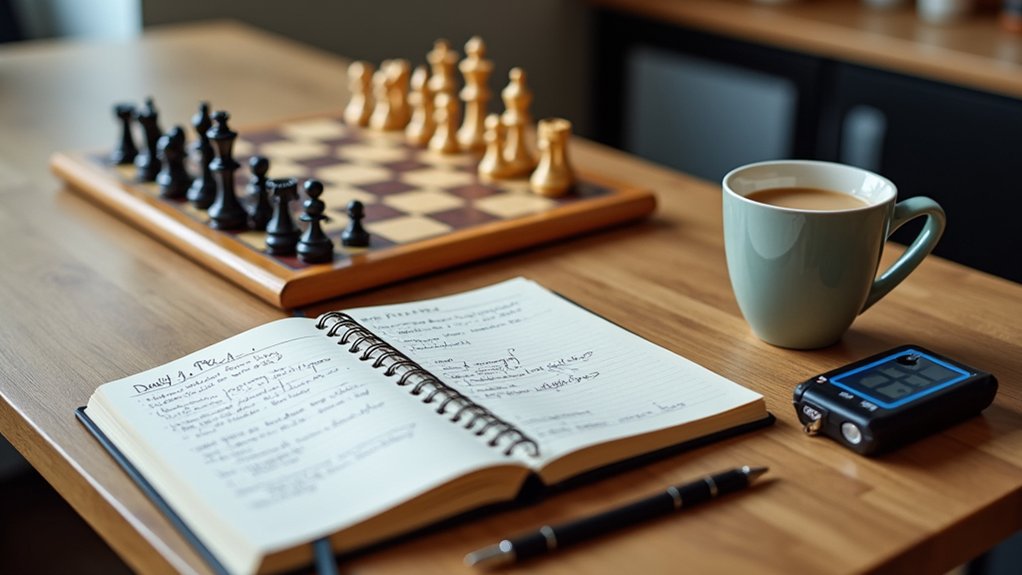
When you want to improve at chess, setting clear goals helps you stay focused. Goal setting means defining what you want to achieve, like mastering openings or increasing your rating. Make your goals specific and measurable, such as practicing for 30 minutes daily or solving ten puzzles each week.
Next, implement performance tracking. This means keeping a record of your progress. You can use a notebook or an app to note your games, puzzles solved, and areas needing improvement.
Regularly review this information to adjust your goals and stay motivated. Clear goals and performance tracking are essential for effective daily chess practice. Additionally, understanding your chess rating systems can provide insight into your progress and help you set realistic benchmarks for improvement.
Analyze Your Games
Analyzing your games is essential if you want to improve at chess. After each match, review your moves carefully. Look for game patterns, which are common strategies or tactics that emerge throughout your play. Understanding these patterns helps you recognize effective moves.
Next, focus on mistake identification. Identify the errors you made and think about why they happened. Did you overlook a threat? Did you miscalculate a sequence? Additionally, consider how piece coordination can influence your game strategy, as this is crucial for executing effective checkmate patterns.
Study Chess Tactics
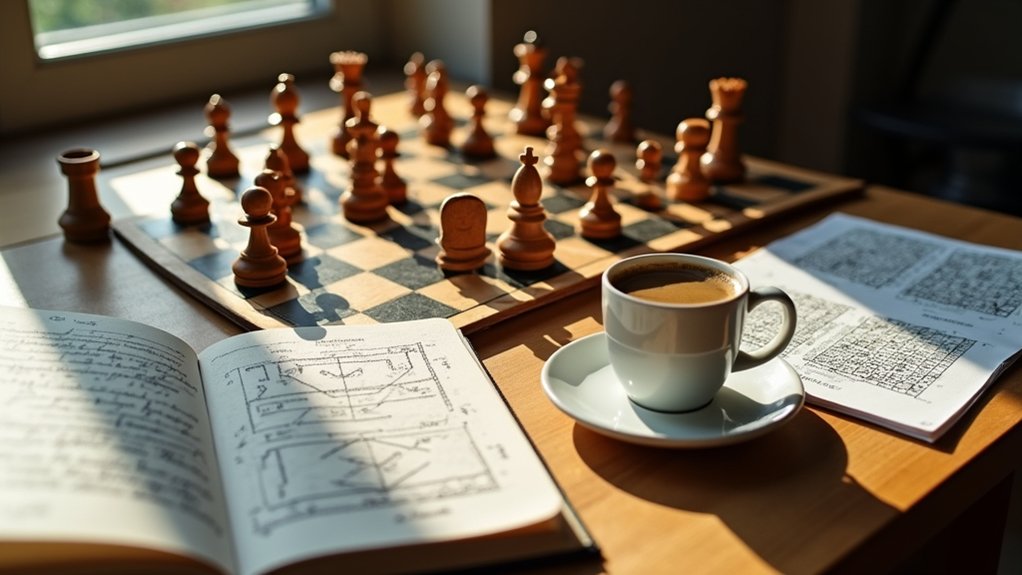
Studying chess tactics is essential for improving your game, as it helps you recognize patterns and opportunities during matches.
Focus on solving tactical puzzles daily. These puzzles present specific scenarios where you can train your mind to spot winning moves.
As you practice, pay attention to pattern recognition. This means identifying recurring themes in tactics, such as forks, pins, and skewers.
The more you practice, the quicker you’ll recognize these patterns in real games. Set aside time each day for this exercise; it’ll sharpen your skills and enhance your overall understanding of chess strategy. Additionally, mastering controlling the center is crucial for effective tactical play, as it provides greater mobility and options for your pieces.
Consistency is key for progress.
Play Regularly Against Strong Opponents
Playing regularly against strong opponents is essential for your chess improvement. You can find these players on online platforms like Chess.com or Lichess.org. These sites let you face various skill levels, challenging you to adapt your strategies.
Local clubs are another great option. Joining a club gives you the chance to play face-to-face with stronger players. You’ll receive immediate feedback and learn from their techniques.
When you play against tough opponents, you’ll encounter new ideas and tactics. This experience enhances your decision-making and overall game. Additionally, utilizing analysis tools can help you understand your mistakes and improve faster.
Make it a habit to seek out these opportunities consistently.
Review and Learn From Classical Games

When you review and learn from classical games, you’re opening a window to the strategies of great players. Famous matches, like those played by Bobby Fischer or Garry Kasparov, showcase brilliant tactics and techniques.
Start by selecting a few key games, then find game annotations that explain each move. These notes help you understand why players made certain choices.
As you analyze the games, pay attention to openings, tactics, and endgames. Ask yourself questions about their decisions.
This practice not only improves your understanding of chess but also inspires you to develop your own strategies in future matches. Additionally, engaging with these games can highlight the benefits of professional instruction as you refine your skills and avoid common pitfalls.
FAQs
How Much Time Should I Dedicate to Chess Daily?
You should aim to dedicate at least 30 minutes to chess daily. This helps with time management, which is important for improvement.
In your daily routine, set aside specific times for practice. You can break this into shorter sessions, like 15 minutes in the morning and 15 minutes in the evening.
Consistency is key, so try to stick to your schedule. Over time, you’ll notice your skills and understanding of the game will grow.
Are There Specific Chess Books for Beginners?
Yes, there are specific chess books for beginners.
You should look for chess literature recommendations that focus on beginner strategy guides. Books like “Chess for Dummies” and “Bobby Fischer Teaches Chess” are great starting points.
They explain basic concepts, like piece movements and tactics, in simple terms.
These resources help you build a strong foundation, making it easier to progress in your chess journey.
Start reading, and practice what you learn!
What Online Platforms Are Best for Practicing Chess?
To practice chess effectively, consider using popular online platforms like Chess.com or Lichess.org.
These sites offer lessons, puzzles, and online tournaments, which are competitive matches you can join to improve your skills.
Start by creating an account. Once you’re in, explore the lessons to learn strategies.
After that, try solving puzzles for practice.
Finally, participate in online tournaments to test what you’ve learned against other players.
How Can I Stay Motivated to Practice Daily?
To stay motivated to practice daily, start with goal setting. Set specific, achievable goals, like practicing for 30 minutes each day.
Break larger goals into smaller tasks, so you can see progress.
Next, create a reward system. After reaching your daily or weekly goals, reward yourself with something enjoyable, like a favorite snack or extra game time.
This will help you stay focused and make practicing feel more rewarding.
Should I Focus on Openings or Endgames First?
You should focus on opening principles first. These are the basic ideas that guide your first moves, like controlling the center and developing your pieces. Strong openings set you up for a good game.
Once you’re comfortable with openings, shift your attention to endgame techniques. Endgames involve the final moves when few pieces remain. Understanding these can help you convert advantages into wins.
Balancing both will improve your overall chess skills.
Final Thoughts
By practicing chess daily with these five strategies, you can improve your skills. Set clear goals to guide your learning. Analyzing your games helps you find mistakes and strengths. Studying chess tactics sharpens your problem-solving skills. Playing against strong opponents challenges you to think better. Finally, reviewing classical games exposes you to great strategies. Stick to this routine, and you’ll see progress in your chess abilities. Keep practicing, and enjoy your journey in chess!


