

To choose the perfect chess set, start by understanding your playing style. If you prefer aggressive tactics, select bold pieces. For defensive strategies, look for stable designs. Next, explore materials like wooden or plastic options based on your budget. Consider the size; a board should be 16 to 20 inches square. Design matters too—choose one that showcases your personality. Finally, think about storage and portability for easy organization. You’ll discover more important tips as you continue your search.
Understand Your Playing Style

How do you know what chess set suits you best? Start by understanding your playing style.
If you prefer aggressive tactics, look for pieces that inspire bold moves and quick decisions. These sets often have sharp designs, enhancing your competitive edge.
On the other hand, if you favor defensive strategies, choose a chess set that emphasizes stability and control.
Look for pieces that allow you to create solid formations and protect your king effectively. Additionally, consider how the set aligns with fundamental concepts like check and checkmate, which can influence your overall strategy during the game.
Explore Different Materials
When choosing a chess set, the materials used can greatly affect your game experience.
Wood vs plastic is a common debate. Wooden sets offer classic appeal and durability, while plastic sets are lightweight and affordable.
Next, consider metal vs glass. Metal sets provide a modern touch and can be very sturdy, but they might be heavier.
Glass sets look elegant and can serve as decorative pieces, but they’re fragile and require careful handling.
Think about how you’ll use your set, your aesthetic preferences, and your budget, as these factors will help you make the best choice. Additionally, selecting a set that includes pieces with unique movement capabilities, like the knight’s L-shaped movement, can enhance your strategic gameplay.
Consider the Size and Scale

Choosing the right size and scale for your chess set is essential for a satisfying game experience.
First, consider the board dimensions. A standard board is usually 16 to 20 inches square. If you have limited space, a smaller board may work better.
Next, think about piece proportions. The height of the tallest piece should be roughly one-third the size of the board’s squares. For example, if your squares are 2 inches, the king should be about 2.5 inches tall.
Matching the board dimensions with the piece proportions guarantees comfortable play, making your game more enjoyable. Additionally, ensure that your set includes all 32 pieces, as a complete set is vital for a traditional chess game and to fully enjoy the experience.
Choose a Design That Reflects Your Personality
A chess set is more than just a game; it can also be a reflection of your personal style. When choosing a design, think about your artistic expression. This means selecting pieces that showcase your creativity and tastes.
Consider personal symbolism, which refers to designs that hold special meaning for you. For instance, if you love nature, you might choose a wooden set with tree motifs.
If you’re a history buff, opt for a set inspired by historical figures or events.
Ultimately, your chess set should resonate with who you are, making every game enjoyable and meaningful. Moreover, selecting a set that aligns with your style can enhance your learning curve in chess, as it fosters a deeper connection to the game.
Set a Budget
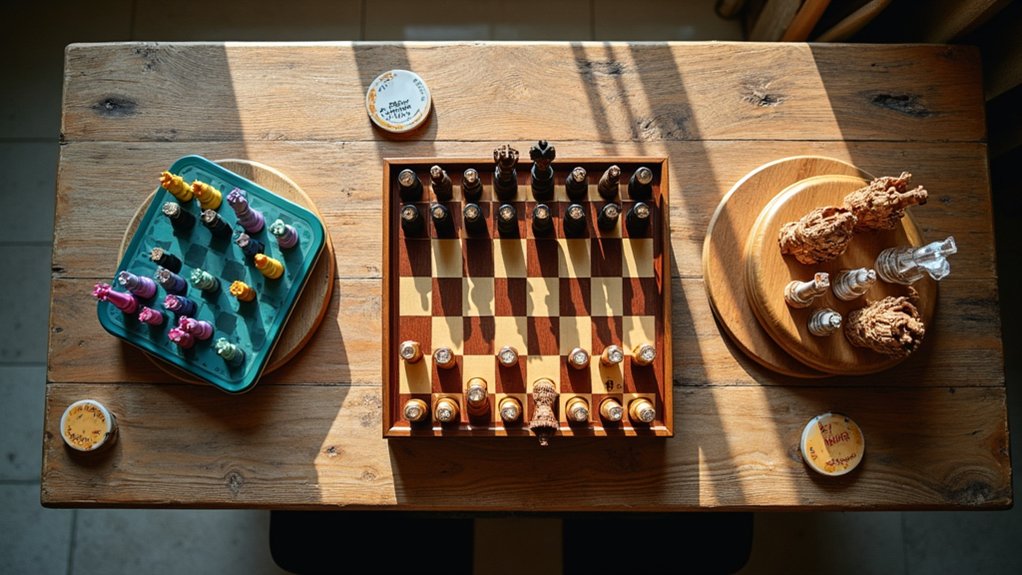
Setting a budget is important because it helps you find the right chess set without overspending. Start by determining your budget considerations. Think about how much you’re willing to spend.
Chess sets can vary widely in price, so knowing your price range will guide your choices. Generally, beginner sets are more affordable, while high-quality wooden sets can be pricier.
Consider what features matter most to you, like material and design. Once you have a clear budget, you can explore options that fit within it. This way, you’ll avoid impulse purchases and find a chess set that suits your needs and finances. Additionally, understanding that chess has been recognized by the International Olympic Committee can help you appreciate the significance of investing in a quality set.
Think About Storage and Portability
How should you store and transport your chess set? First, consider compact storage options. A set that fits neatly in a small box or case makes it easy to store and reduces clutter.
If you travel often, look for travel sets. These typically feature lightweight pieces and foldable boards, making them great for on-the-go play. Magnetic chess boards are particularly beneficial for keeping pieces secure during movement, ensuring a smoother travel experience.
When choosing your chess set, think about how you’ll carry it. A sturdy carrying case or bag can protect your pieces and board during transport.
Always check that your chosen set meets your needs for both storage and portability, ensuring hassle-free chess experiences.
FAQs
What Is the History Behind Different Chess Set Designs?
Chess set designs have evolved over centuries. Early sets used simple shapes, while later designs were influenced by culture and art.
For instance, the Staunton design, created in the 19th century, became popular due to its clear piece shapes. Different regions, like India and Europe, added unique elements to their sets.
This chess evolution shows how design influences come from history, culture, and the need for clarity in gameplay.
How Do I Care for and Maintain My Chess Set?
To care for and maintain your chess set, start with regular cleaning techniques. Use a soft cloth to wipe down pieces, removing dust and fingerprints.
For wooden sets, a gentle polish can protect the finish.
Proper storage is essential; keep your chess set in a dry place, away from direct sunlight. Use a padded case or box to avoid scratches.
This way, your chess set stays in great shape for years to come.
Are There Chess Sets Specifically Designed for Children?
Yes, there are chess sets designed specifically for children. These sets often feature kid-friendly designs, like colorful pieces and fun themes. Such designs make the game more appealing and engaging for younger players.
Many children’s chess sets also include educational features, like guides and simplified rules, which help kids learn the game.
Look for sets that emphasize these aspects to guarantee a fun and informative experience for your child as they develop their chess skills.
Can I Customize My Chess Pieces or Board?
Yes, you can customize your chess pieces or board. Many stores offer customization options, like choosing colors and designs.
You can select different piece materials, such as wood, plastic, or metal, which affect the look and feel of your set.
To start, decide what style you prefer, then explore options online or in local shops.
Customizing your set lets you create a unique chess experience that reflects your personality and taste.
How Do Themed Chess Sets Differ From Traditional Ones?
Themed chess sets differ from traditional chess sets primarily in design.
Traditional chess features standard pieces like kings, queens, and pawns, usually in simple colors. Themed chess sets, however, have unique designs based on specific themes, like movies or historical events.
These sets can be visually striking and add personality to the game. While traditional chess focuses on strategy, themed chess can also reflect your personal interests and creativity.
Final Thoughts
Choosing the right chess set is important for your game. Start by understanding your playing style, then explore materials like wood or plastic. Size matters too, so pick one that feels comfortable. Select a design that shows your personality. Set a budget to avoid overspending. Finally, think about how you’ll store or carry your set. With these tips, you can find a chess set that fits you perfectly and enhances your playing experience.


