

The second most powerful piece in chess is the rook. Rooks move straight along rows or columns and can control open lines effectively. They’re strong, especially when there are no pawns blocking their path. This ability allows rooks to put pressure on your opponent and support your other pieces. Using rooks wisely can lead to winning opportunities. Understanding how to maximize their potential can strengthen your strategy, and there’s more to learn about piece roles on the board.
The Queen: Power and Versatility
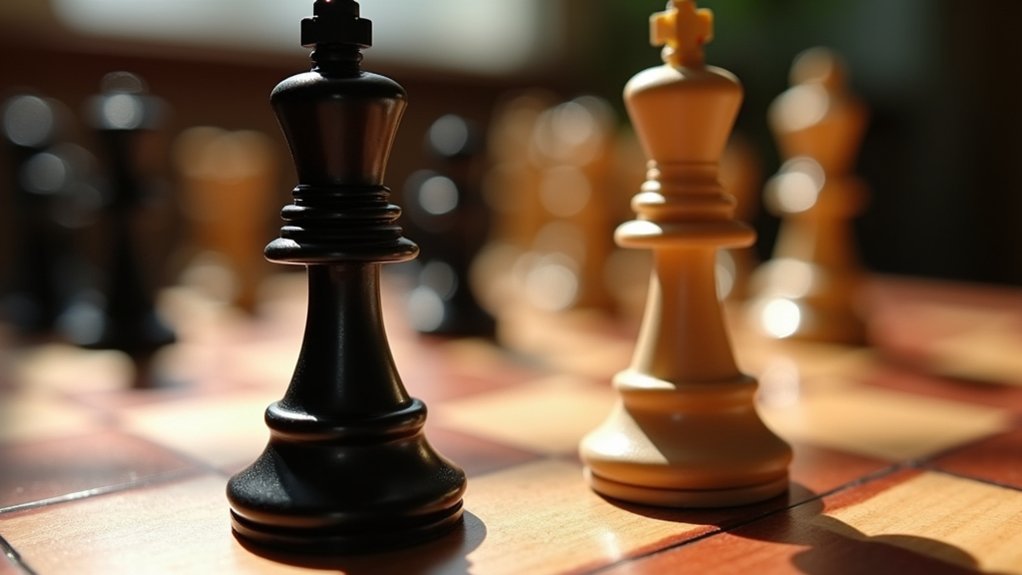
The queen is the most powerful piece in chess, and it can move in multiple ways. It can travel any number of squares vertically, horizontally, or diagonally. This queen mobility gives you a significant advantage over your opponent. You can control the board and threaten multiple pieces at once.
Sometimes, you’ll need to make strategic sacrifices. This means giving up a piece to gain a better position or to create a winning opportunity.
Using the queen effectively can lead to checkmate, so consider her movements carefully. Remember, maximizing her power often means balancing offense and defense in your strategy. Additionally, understanding common tactics involving the queen, such as pins and forks, can greatly enhance your overall game strategy.
Rooks: Dominance in Open Lines
While you might think of the queen as the most powerful piece, rooks also hold significant strength, especially in open lines.
Rooks excel in rook mobility, which means they can move across the board easily. When placed on open files—columns without pawns—they control more space and threaten enemy pieces effectively.
Using open file advantages, you can create pressure on your opponent. Rooks can double up on files, increasing their power.
Always look to place your rooks on these lines. This strategy enhances their effectiveness and helps you dominate the game, making rooks a crucial part of your chess arsenal. Rooks are particularly valuable because they can move in straight lines, allowing them to cover large distances and exert control over key areas on the board.
Bishops: Long-Distance Control
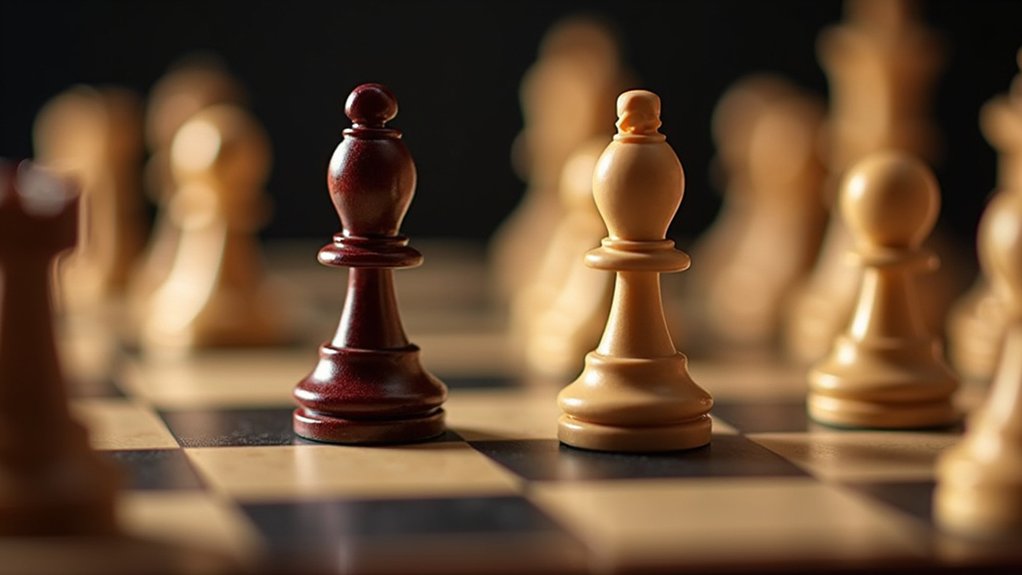
Bishops are essential for controlling long-range attacks on the chessboard. They move diagonally, allowing them to cover both color complexes effectively. This diagonal control means they can influence many squares from a distance, creating threats and supporting your pieces.
In the opening phase, focus on piece development to get your bishops out early. Place them on active squares where they can exert pressure on your opponent.
An advanced bishop can control key diagonals, making it harder for your opponent to organize their defenses. Remember, well-placed bishops can often change the course of the game with their long-range capabilities. Additionally, the bishop pair can provide a significant advantage in open positions, maximizing your control over the board.
Knights: Tactical Complexity
Knights add a layer of tactical complexity to the game of chess. Their unique movement allows them to jump over pieces, making them unpredictable.
One powerful tactic is the knight fork, where a knight attacks two or more pieces simultaneously. This forces your opponent to choose which piece to save, often leading to material gain for you.
Understanding tactical motifs, like forks, is essential for effective play. Recognizing opportunities to use your knights in this way can shift the game’s balance.
Always look for ways to position your knight for maximum impact, as their potential is often underestimated. By mastering knight positioning, you can greatly enhance your overall strategy and effectiveness in the game.
The Importance of Piece Coordination
In chess, coordinating your pieces effectively is essential for controlling the board. Piece synergy means your pieces work together, creating stronger attacks and defenses. For example, when your rooks and queen align strategically, they can cover more squares and threaten your opponent.
Strategic alignment involves positioning your pieces so they support each other. This can help you control key areas of the board, making it harder for your opponent to maneuver.
Always look for ways to enhance your piece synergy, as this can turn the tide in your favor. Remember, well-coordinated pieces can dominate the game more than individual strength alone. Additionally, focusing on developing your pieces early in the game lays the groundwork for effective piece coordination later on.
FAQs
Can the Queen Be Captured Without Losing Game Advantage?
Yes, you can capture the queen without losing game advantage. This strategy is called a queen sacrifice.
When you sacrifice your queen, you might create a tactical advantage. A tactical advantage means you can gain a better position or threaten your opponent’s pieces.
Plan your moves carefully. Make sure the sacrifice leads to a stronger position or forces your opponent to make mistakes.
Always think ahead to maximize your chances of winning.
How Does Pawn Structure Affect Piece Power?
Pawn structure greatly influences your piece power. Good pawn mobility, or how freely your pawns can move, creates strong positioning for your pieces. If your pawns are well-placed, they support your pieces and control key squares.
However, structure weaknesses, like isolated or doubled pawns, can hinder your plans. These weaknesses can leave your pieces vulnerable and limit their effectiveness.
Focus on maintaining a solid pawn structure to maximize your overall piece strength.
What Is the Historical Evolution of Chess Pieces?
Chess pieces have evolved over centuries. Early designs varied by culture, with pieces made from wood, ivory, or stone.
As chess spread, piece design changed to reflect local styles. For example, the modern rook evolved from a castle, while the bishop originated from an elephant.
These changes are part of chess evolution, adapting to players’ preferences and aesthetics.
Understanding this helps you appreciate the game’s rich history and how pieces influence strategy.
Are There Any Famous Chess Games Showcasing the Queen’s Power?
Yes, there are many famous chess games that showcase queen tactics.
One example is the 1972 World Championship match between Bobby Fischer and Boris Spassky. Fischer used his queen effectively to control the board and create threats.
Another notable game is the 1956 game between Mikhail Tal and Mikhail Botvinnik. Tal’s aggressive use of his queen led to a swift victory.
These historical matches highlight the queen’s power in chess strategy.
How Can Beginners Improve Their Use of the Queen?
To improve your use of the queen, start by practicing queen tactics. These are strategies that let you control the board.
Beginner strategies include centralizing your queen, where it can attack multiple pieces, and avoiding early exposure.
Also, learn to coordinate your queen with other pieces. This teamwork can create powerful threats.
Finally, always watch for traps. Keeping your queen safe is essential for maintaining its strength in the game.
Final Thoughts
In summary, the Queen is the most powerful piece in chess, while the Rook holds the title of the second most powerful. Rooks excel in controlling open lines and supporting other pieces. Understanding how each piece works together is essential for success. Always think about piece coordination and how to use them effectively. By practicing these strategies, you’ll improve your game and make better moves. Keep learning and exploring different tactics for winning.


