

Chess isn’t an official Olympic sport, but it has a notable presence during the Olympics through events organized by FIDE, the International Chess Federation. The first Chess Olympiad took place in 1924, and chess is recognized as an intellectual sport. While it shares important qualities with traditional sports, like strategy and skill, its inclusion could promote critical thinking and teamwork. There’s growing support for chess’s recognition in the Olympic framework, which could lead to exciting changes ahead. Continue to explore its evolving role in sports.
The Current Status of Chess in the Olympic Framework

Chess currently holds a unique position in the Olympic framework. While it’s not an official Olympic sport, chess events are organized under the International Chess Federation (FIDE). These events showcase skill and strategy, attracting players worldwide.
Olympic recognition for chess is significant, as it highlights the game’s importance. Many countries support chess as part of their national sports programs.
Chess events often occur during the Olympics, even if they’re not medal-awarding. This helps promote the game and encourages more people to play. Understanding this status is essential for anyone interested in chess and its relationship with the Olympic movement. Additionally, chess is recognized by the International Olympic Committee, which adds to its prestige and global reach.
Historical Context: Chess and the Olympics
While many people think of the Olympics as a place for physical sports, chess has a long and interesting history with this global event.
Chess origins date back to ancient India, evolving over centuries into the game that’s recognized today.
In the early 20th century, chess began to gain recognition in Olympic history. The first Chess Olympiad took place in 1924, alongside the Summer Olympics in Paris. This event highlighted chess as a competitive, intellectual sport.
Though not officially part of the Olympics, chess continues to be associated with the Olympic movement, promoting mental skill and strategic thinking worldwide. Additionally, studies suggest that cognitive benefits from playing chess can enhance skills that are valuable in various competitive environments.
Arguments for Chess’s Inclusion as an Olympic Sport
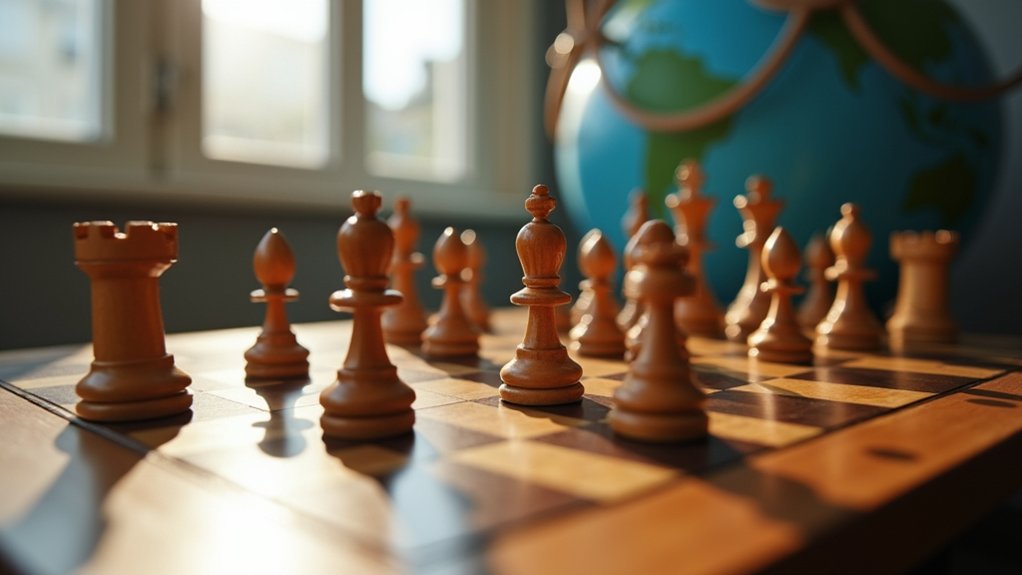
Many people believe chess deserves a spot in the Olympics because it shares qualities with traditional sports. Chess is a game of strategy and skill, requiring intense focus and mental effort. This makes it a mental sport, where players must think several moves ahead.
Additionally, chess popularity has surged globally, attracting millions of players and fans. Including chess in the Olympics would recognize its significance and encourage more people to engage with the game.
It promotes critical thinking, sportsmanship, and international camaraderie. Overall, these factors support the argument for chess’s inclusion in the prestigious Olympic Games. Furthermore, chess enhances cognitive development, providing players with improved critical thinking and problem-solving abilities.
The International Chess Federation’s Role
The International Chess Federation, known as FIDE, plays an essential role in promoting chess worldwide.
FIDE establishes regulations that govern how chess is played and organized. These rules guarantee fair competition and help maintain the integrity of the game.
FIDE also oversees chess tournaments and rankings, which are important for players and fans alike.
They work to create a structured environment for chess governance, allowing national federations to operate under a unified system.
By doing this, FIDE strengthens the chess community and encourages growth.
Through its efforts, FIDE aims to elevate chess and potentially secure its place in the Olympic movement. Additionally, FIDE promotes the development of chess ratings, which helps players transition into competitive play.
Perspectives From Chess Players and Enthusiasts

What do chess players and enthusiasts think about chess being an Olympic sport? Many in the chess community believe it should be. They see the Olympics as a chance to elevate chess to a global stage.
Player experiences vary; some feel proud that chess represents strategic thinking, while others worry about the competition’s intensity.
Chess community perspectives often highlight the need for recognition, as many players train rigorously. They argue that inclusion in the Olympics could inspire youth and grow interest in the game. Furthermore, the addition of chess to the Olympics could bring attention to the chess rating systems that help players gauge their progress and skill level.
Future Prospects for Chess in the Olympic Games
As chess continues to gain popularity worldwide, its future in the Olympic Games looks promising. Chess inclusion means adding chess as an official sport in the Olympics. This could attract more players and fans, enhancing the game’s visibility. Future tournaments may showcase chess alongside traditional sports, creating a diverse competition atmosphere. The International Chess Federation (FIDE) is working to promote this idea. They’re advocating for recognition and support from the International Olympic Committee (IOC). If successful, you might see chess in future Olympic events, allowing players to compete on a global stage, inspiring new generations to take up the game. Additionally, the inclusion of chess could help address gender disparity in chess participation rates, making the game more accessible to all.
FAQs
What Are the Benefits of Chess Being in the Olympics?
If chess becomes part of the Olympics, it gains global recognition. This means more people will learn about the game and its strategies.
Also, increased funding could follow. More money can support tournaments, training programs, and youth initiatives.
These benefits help improve the overall quality of chess, making it more accessible for everyone.
How Is Chess Currently Funded Outside of the Olympics?
Chess gets funding through several sources. You’ll find sponsorship deals, where companies pay to support events or teams.
Crowdfunding initiatives allow fans to contribute money for tournaments or projects, often through online platforms.
Government grants can help organize local chess programs or competitions, while private donations from individuals also support chess clubs and activities.
Each funding source plays an essential role in keeping chess accessible and promoting its growth in communities.
Are There Any Olympic-Style Chess Tournaments?
Yes, there are Olympic-style chess tournaments, often called chess championships.
These events use tournament formats, which are structured ways to organize matches between players. In such formats, players compete in rounds, with winners advancing.
Some popular formats include knockout tournaments, where losing players are eliminated, and round-robin tournaments, where everyone plays against each other.
These championships can attract top players and provide competitive experiences similar to those found in traditional Olympic sports.
How Do International Ratings Affect Chess Players’ Olympic Eligibility?
International ratings affect chess players’ eligibility by determining their player rankings.
These rankings come from rating systems, which measure a player’s skill based on their game results. Higher ratings indicate stronger players.
For tournaments, including Olympic events, players often need to meet specific rating thresholds.
This means that if you want to compete at a high level, you’ll need to focus on improving your rating to qualify for prestigious competitions.
What Is the Role of Technology in Competitive Chess Today?
Technology plays a big role in competitive chess today. You use chess engines, which are powerful computer programs, to analyze your moves and improve your game. These engines help you see the best strategies and learn from mistakes.
Online platforms allow you to play against others worldwide, practice at any time, and join tournaments. This accessibility enhances your skills and connects you with a larger chess community, making the game more engaging and educational.
Final Thoughts
In summary, chess is not currently an Olympic sport, but it has a strong historical connection to the Olympic Games. Many people support its inclusion, believing it deserves a place alongside traditional sports. The International Chess Federation works to promote chess worldwide and advocates for its Olympic status. As interest in chess grows, its future in the Olympics looks promising. Whether chess will join the ranks of Olympic sports remains to be seen, but discussions continue.


