

Yes, chess can make you smarter by improving your cognitive abilities. It helps develop critical thinking, problem-solving skills, and memory. When you play chess, you analyze different moves and outcomes, sharpening your concentration. This strategic game enhances learning and boosts academic performance, as studies show. It also encourages teamwork and social skills through interaction with others. If you’re curious about more benefits and success stories related to chess, there’s plenty more to explore.
The History of Chess and Its Educational Roots
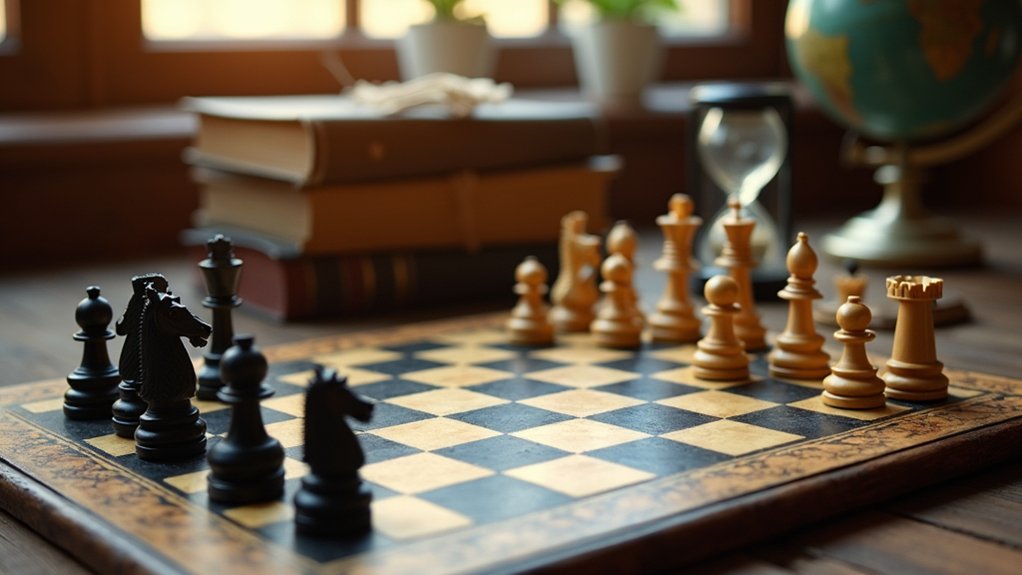
Chess has a long history that dates back over a thousand years, and it has roots in education. Its chess origins trace back to ancient India, where it was called Chaturanga. This game taught strategic thinking and problem-solving.
As it spread, educators recognized chess as a tool to enhance cognitive skills. Many cultures adopted it, integrating it into their educational philosophy. They believed playing chess could help develop critical thinking and decision-making abilities.
Today, schools often use chess to promote learning. Scientific research has shown that engaging in chess can lead to improvements in various cognitive areas. By understanding chess history, you see its educational value and how it’s shaped thinking through generations.
Cognitive Benefits of Chess: An Overview
Playing chess offers numerous cognitive benefits that can enhance your thinking skills. It promotes cognitive development, which is how you learn and process information.
By playing chess, you’ll improve your mental agility, meaning you can think quickly and adapt to new situations. As you strategize your moves, you’ll sharpen your memory and boost your concentration.
This game challenges your brain, encouraging you to analyze various scenarios. It also helps you recognize patterns, which is essential for effective learning. Moreover, studies show that regular chess practice can strengthen neural connections, enhancing overall cognitive function and potentially preventing cognitive decline in older adults.
Enhancing Problem-Solving Skills Through Strategy
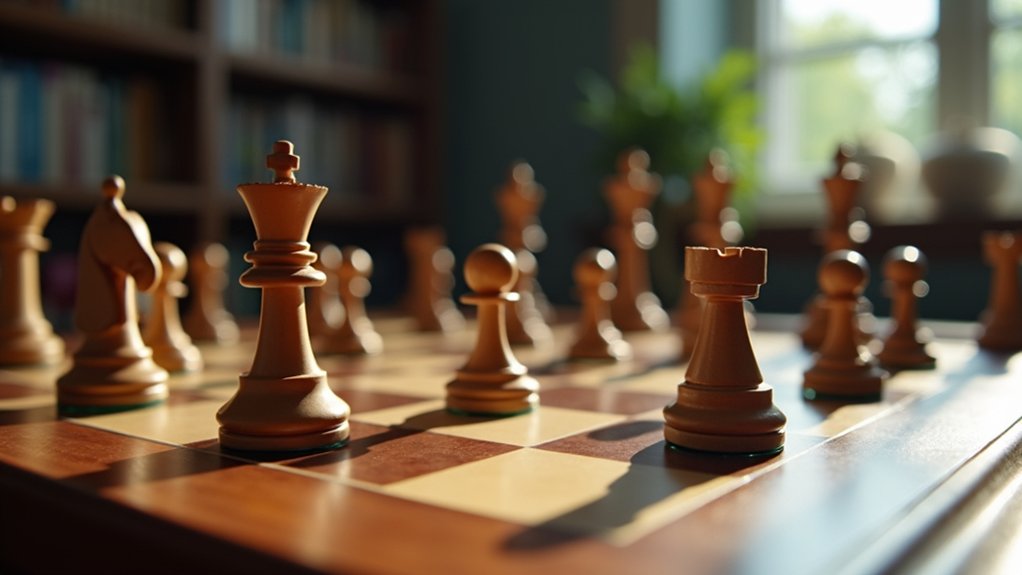
When you engage in strategic gameplay, you sharpen your problem-solving skills. Chess requires tactical analysis, which means breaking down the board and considering your opponent’s moves. This practice helps you think critically about various outcomes.
Through strategic planning, you develop the ability to foresee consequences and plan several moves ahead. You learn to evaluate different scenarios, weighing risks against rewards.
Each game challenges you to find solutions to complex problems, enhancing your analytical skills. As shown in studies, chess players often exhibit strengths in cognitive functions that enhance their problem-solving abilities.
As you practice these strategies, you become more adept at tackling challenges, both on and off the chessboard, equipping you for real-life situations.
The Role of Memory and Concentration in Chess
Strategic thinking in chess also heavily relies on memory and concentration. You need to remember past games, strategies, and patterns. Using memory techniques, like visualization, can help you retain important moves.
Concentration exercises are essential too. They train your mind to focus during a game, reducing distractions.
Practice meditation or deep breathing to enhance your concentration.
By improving your memory and concentration, you’ll make better decisions and anticipate your opponent’s moves. Incorporating methods like spaced repetition can significantly enhance your retention of key strategies and openings.
These skills aren’t just for chess; they also benefit your studies and everyday tasks. Strengthening them will help you in various aspects of life.
Critical Thinking: Analyzing Moves and Outcomes
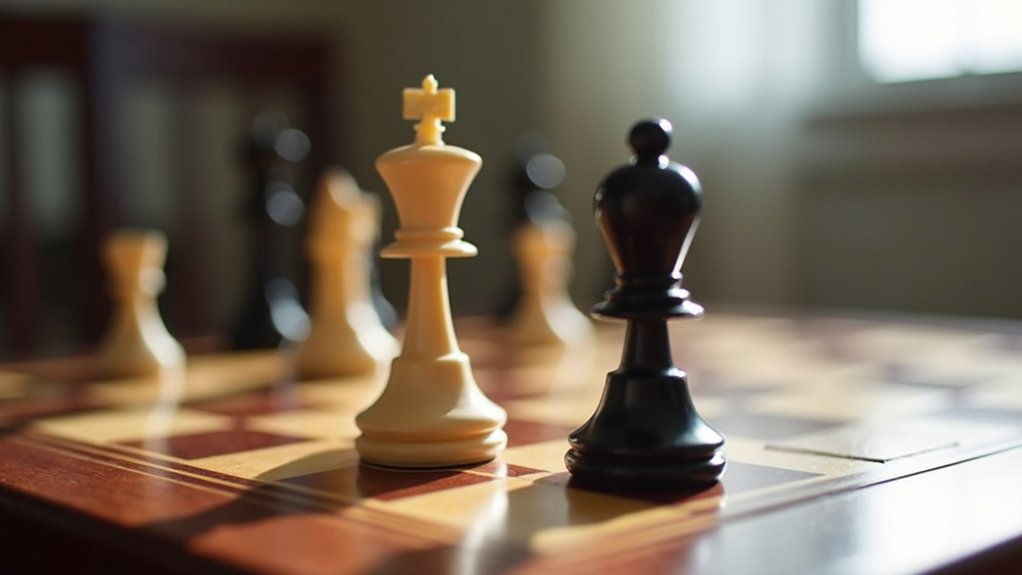
Outcome prediction involves forecasting the result of your choice. You consider how your opponent might respond and what the game will look like after each move. This process is essential for controlling the center, as it allows players to anticipate threats and strategize effectively during the game.
Creativity Boost: Thinking Outside the Box
Chess not only helps with critical thinking, but it also boosts your creativity. When you play, you learn to develop creative strategies. These are unique plans that you design to outsmart your opponent.
You also use unconventional tactics, which are unusual methods that surprise your rival. This practice encourages you to think beyond the usual moves.
By exploring different ways to play, you expand your imagination. You start to see solutions that others might miss.
Incorporating these skills into your chess game can make you a more innovative thinker in everyday situations, both on and off the board. Additionally, studying fundamental techniques enhances your ability to think creatively, allowing you to approach problems from various angles.
Chess and Academic Performance: What the Studies Say
Playing chess not only enhances creativity but also has a positive impact on academic performance. Studies show that students who participate in chess tournaments often exhibit improved grades. This improvement comes from increased academic engagement, which means students pay more attention and stay focused in class.
Chess helps develop critical thinking and problem-solving skills, making it easier for you to understand complex subjects. You learn to plan ahead and think logically. Additionally, engaging in chess promotes memory enhancement, which further supports academic success.
As a result, these skills can translate to better performance in subjects like math and science. Overall, engaging with chess can boost both your skills and academic achievement.
Social Skills Development Through Chess Interaction
While you play chess, you’ll notice that it helps you build important social skills. Engaging with others during games enhances your communication skills. You learn to express your thoughts clearly while discussing strategies or moves.
Additionally, chess often involves team collaboration, especially in tournaments or group settings. You work together with teammates, sharing ideas on how to approach the game. This teamwork fosters trust and respect among players.
As you interact with opponents and allies, you develop a better understanding of social cues and behaviors. This makes chess a valuable tool for improving your social interactions in various settings. Moreover, participating in a chess club can provide a supportive community that encourages ongoing social engagement and skill development.
Chess as a Tool for Emotional Intelligence
Emotional intelligence, which is the ability to understand and manage your own feelings while recognizing the feelings of others, can be developed through chess.
When you play, you practice emotional regulation, which means controlling your emotions during wins and losses. You learn to stay calm under pressure, helping you handle your feelings better.
Additionally, chess fosters empathy development. By considering your opponent’s moves, you begin to understand their perspective.
This skill translates into everyday life, improving your relationships.
Integrating Chess Into Educational Curricula: Success Stories
Integrating chess into educational curricula has shown significant benefits for students. Schools that adopt chess programs often see improvements in critical thinking and problem-solving skills. When you include chess in classroom integration, students learn strategy and patience.
Success stories from various schools highlight these advantages. For instance, a New York school reported enhanced focus and academic performance among its students after implementing chess lessons.
Additionally, a Texas school found that chess helped reduce behavioral issues. These examples demonstrate that chess programs can create engaging learning environments, making education more effective and enjoyable for students of all ages.
FAQs
Can Chess Help With Other Mental Health Issues?
Yes, chess can help with mental health issues. Chess therapy uses the game to enhance cognitive skills, like problem-solving and decision-making. This can improve focus and reduce anxiety.
When you play chess, you’re engaging your mind, which can boost your mood. It also encourages social interaction, helping you connect with others.
What Age Is Best to Start Learning Chess?
The best age to start learning chess is around 6 to 8 years old. At this age, your child’s brain is developing important cognitive skills, like problem-solving and critical thinking.
Chess helps strengthen these skills.
Begin with simple rules and short games to keep your child engaged. As they grow, introduce more complex strategies.
Regular practice can boost their confidence and improve their focus, benefiting overall child development.
Are There Famous Chess Players With Learning Disabilities?
Yes, there are famous players with learning disabilities. One example is grandmaster Bobby Fischer, who struggled with social interactions, often linked to dyslexia.
Another is Magnus Carlsen, who’s attention difficulties but still excelled in chess.
These players show that learning disabilities don’t stop someone from achieving greatness in chess.
It’s important to recognize that every player has unique strengths and challenges, and chess can be a platform for success.
How Long Does It Take to Learn Chess Basics?
Learning the basics of chess usually takes a few hours to a few days, depending on your learning pace.
Start by understanding the board, pieces, and their movements. Then, focus on basic chess strategies, like controlling the center and protecting your king.
Practice regularly, as this helps reinforce what you’ve learned.
As you get more comfortable, you’ll naturally pick up advanced strategies and improve your game over time.
Can Online Chess Platforms Provide the Same Benefits?
Online chess platforms can provide similar benefits to traditional chess. When you play online, you still practice critical thinking and strategy.
These activities improve your cognitive skills, which are your brain’s ability to think and learn. You can also analyze your games, helping you learn from mistakes.
Engaging with opponents fosters social skills. Overall, online chess offers a convenient way to develop your cognitive abilities while enjoying the game.
Final Thoughts
In summary, chess can help you become smarter. It improves your problem-solving skills, memory, and concentration. Playing chess also boosts critical thinking by making you analyze moves and outcomes. Studies show that chess can even enhance academic performance. Plus, it helps develop social skills and emotional intelligence. By integrating chess into education, you can experience these benefits firsthand. Consider playing chess regularly to access these cognitive advantages and improve your overall thinking skills.


