

Yes, you burn calories while playing chess. The game demands intense mental focus and strategic thinking. On average, you can burn about 80 to 100 calories per hour. This varies with how intensely you’re playing. Stress and concentration can increase your heart rate, leading to even more calories burned. Though chess isn’t as physically active as some sports, the mental workout is significant. Keep going to find out more about how chess impacts your body.
The Mental Workload of Chess
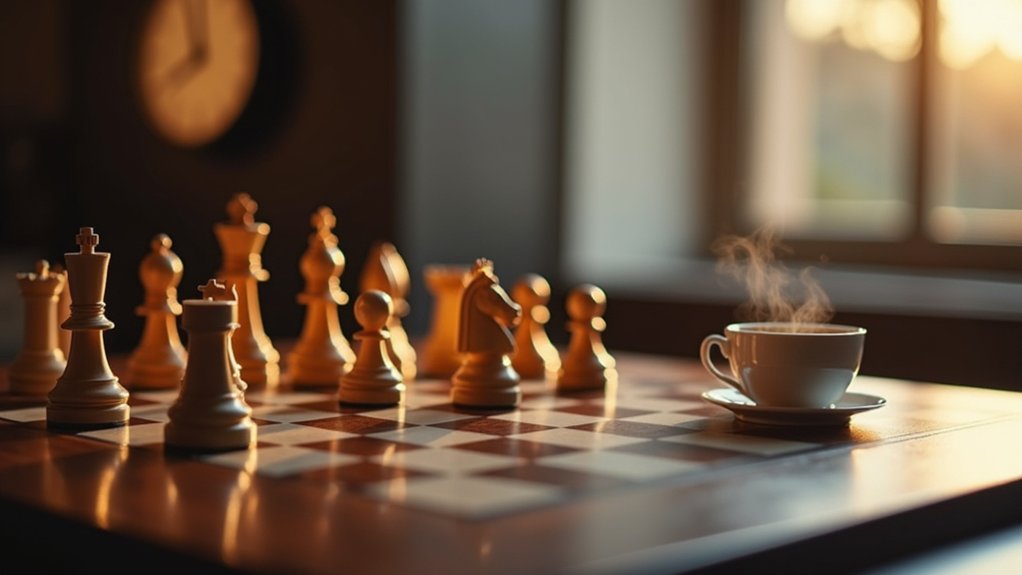
Chess requires intense mental focus and strategic thinking. When you play, you engage your brain in a way that demands a lot of cognitive engagement. This means your mind works hard to analyze the board, predict your opponent’s moves, and plan your strategy.
Each decision requires careful thought and consideration, making the game mentally taxing. You’ll often find yourself weighing different options and evaluating risks. This constant mental activity can lead to fatigue, just like physical exercise. Additionally, studies have shown that regular chess practice can strengthen neural connections and improve decision-making skills.
Physical Activity During a Chess Game
While you might think chess is just a mental game, there’s often more physical activity involved than you realize. Your chess posture plays an essential role in how you engage during the game. Sitting up straight helps improve focus and keeps your brain engaged.
You might shift in your seat or lean forward when considering moves. These small movements can add up, contributing to your overall physical activity.
Additionally, your breathing may quicken as you strategize, adding to the physical aspect. The strategic nature of chess also exercises various mental faculties, which can lead to heightened cognitive engagement during gameplay.
Caloric Burn: Are There Numbers?

When you play chess, you might be surprised to know that you actually burn calories. On average, a person burns about 80 to 100 calories per hour while playing.
This number can vary based on game intensity, which refers to how focused or stressed you feel during play.
Caloric calculations show that higher intensity games, like tournament play, can increase your caloric burn. Stress and concentration boost your heart rate, leading to more calories burned. Additionally, the mental demands of chess can enhance cognitive functions, which may contribute to chess skill and cognitive functions being linked to higher caloric expenditure during intense gameplay.
Factors Influencing Caloric Expenditure
Several factors can influence how many calories you burn while playing chess. One key factor is cognitive engagement, which means how much mental effort you put into the game. The more you think and strategize, the more calories you may burn. Additionally, your stress response plays a role. When you’re focused and feeling pressure during a match, your body can react with increased heart rate and adrenaline, which can lead to higher caloric expenditure. Furthermore, chess can provide valuable cognitive exercise that may enhance problem-solving abilities, contributing to increased mental effort and caloric burn.
Comparing Chess to Other Activities

Chess isn’t the only activity where you can burn calories. Other games, like basketball or soccer, involve more physical movement, which increases calorie burn.
However, chess requires strategic thinking. This mental effort can also lead to some caloric expenditure, especially during intense games.
When comparing game intensity, chess mightn’t match the physical demands of sports, but it engages your brain deeply. Higher game intensity in sports often leads to more calories burned.
In contrast, chess players focus on positions and tactics, which can still be mentally exhausting. Both activities have their benefits, but they burn calories differently. Interestingly, chess has been recognized by the International Olympic Committee as a sport, highlighting its competitive nature.
Tips for Staying Active While Playing Chess
While you focus on your next move, there are ways to stay active during a chess game. First, verify your setup follows good chess ergonomics. This means keeping your chair at the right height and your screen at eye level.
Next, take active breaks every 30 minutes. Stand up, stretch your arms and legs, or walk around for a minute. This helps improve blood flow and keeps you alert.
You can also do simple exercises while seated, like leg lifts or shoulder rolls. Staying active not only benefits your body but can also sharpen your mind for those critical moves. Incorporating active recall strategies during your game can also enhance your cognitive engagement and memory retention.
FAQs
How Many Calories Can a Beginner Burn Playing Chess?
As a beginner playing chess, you might burn around 60 to 90 calories per hour. This depends on your mental focus and how intensely you engage in the game.
When you use beginner strategies, like controlling the center or developing your pieces, you activate your brain more. This increased mental effort can lead to slight calorie burning, even if it’s not as much as physical activities.
Stay focused, and enjoy the challenge!
Does Playing Chess Improve Physical Fitness Over Time?
Playing chess doesn’t directly improve physical fitness, but it enhances mental focus and provides cognitive benefits.
Mental focus means concentrating on the game, which can sharpen your brain. This focus may lead to better decision-making in other areas of life.
While sitting for long periods, you’re not exercising your body, but you’re exercising your mind.
Balancing chess with physical activities can help maintain overall fitness while enjoying the game’s mental challenges.
Can Chess Be Considered a Sport in Calorie Discussions?
Chess can be considered a sport in calorie discussions.
In chess competitions, players engage in intense mental exertion, which involves strategic thinking. This mental activity requires focus and stamina, similar to physical sports.
While there’s less physical activity compared to traditional sports, the mental demands can still burn some calories. Consequently, when discussing calorie expenditure, one should recognize the significant effort involved in competitive chess, even if it doesn’t involve typical physical exercise.
What’S the Average Duration of a Chess Game?
The average game duration of chess varies, but it typically lasts between 30 minutes to several hours.
In a tournament, players often have specific time limits, which affects chess time management. You’ll need to think strategically about your moves within that time.
Quick games may last around 10 minutes, while longer formats can extend to 6 hours or more.
Understanding these durations helps you prepare and manage your time effectively during a game.
How Does Stress Impact Calorie Burn in Chess?
Stress can affect how many calories you burn during chess. When you think hard, you experience cognitive load, or the mental effort needed to process information. This can lead to mental fatigue, which might increase calorie burn slightly as your brain works harder.
However, the overall increase isn’t huge.
If you manage your stress well, you might play better and maintain focus without excessive fatigue, keeping your energy levels stable.
Final Thoughts
To sum up, you do burn some calories while playing chess, but it’s not a lot. The mental effort you put in can lead to a small increase in caloric burn. However, chess isn’t a high-energy activity like running or swimming. To stay active, consider taking breaks to stretch or walk around while you think. This way, you can enjoy the game and keep your body moving. Balancing mental and physical activity is important for overall health.


